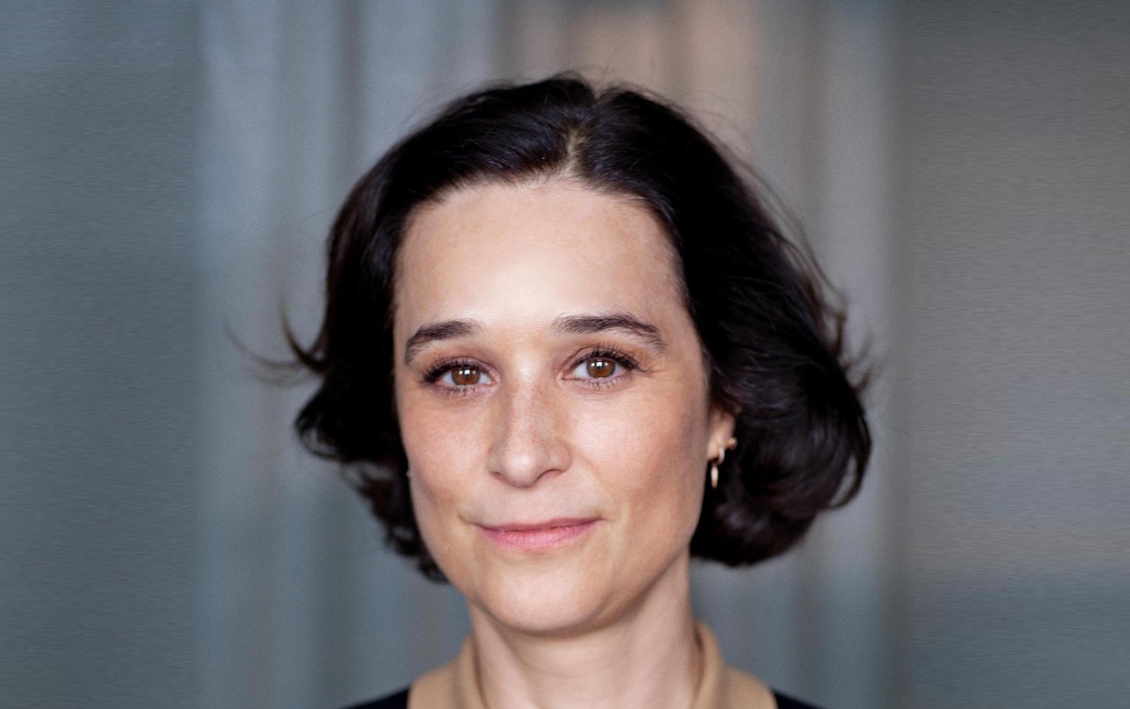
Childhood cancer survival rates in high-income countries now exceed 80 percent, but that masks a more uneven picture: paediatric drug development lags far behind adult oncology, follow-up and psychosocial care remain patchy across Europe, and survivors can face life-altering side effects that surface decades after treatment ends. Carina Schneider and Delphine Heenen bring both professional and deeply personal perspectives to these issues – Schneider as a childhood cancer survivor herself, Heenen as the parent of a son who spent 11 years battling cancer – and discuss the gaps in Europe's paediatric oncology landscape, the hard-fought legislative wins of the past decade, and what still needs to change.
Could you both start by briefly telling us your stories, and how you became involved in patient advocacy?
Carina Schneider (CS): My path into paediatric oncology advocacy was through having sarcoma myself. I was diagnosed at 17, almost 18. I live in Austria, so I could access treatment here, and I was lucky the tumour hadn’t spread yet – even though, as it turned out, I’d actually had it for nine to ten months before diagnosis. That shows the long delay that can happen in reaching the correct diagnosis.
I had my treatment in Austria, which was excellent, state of the art. But I realised afterwards that the follow-up care was lacking in several aspects, particularly related to communication about late effects, respective risks, and access to the psychosocial support you need once treatment ends. Going in, you’re told: you’ll have around nine months of treatment, then you can go back to normal, back to school, back to your life. But you realise you can’t. Being confronted with a life-threatening illness at that age, seeing peers in hospital who died, or who struggled with severe side effects or late effects of treatment – you don’t just go back to normal. It affects the whole family. There’s a clear before and after.
In my follow-up care, these issues simply weren’t addressed openly, and the support wasn’t there – healthcare professionals’ sense of what I needed didn’t match my actual needs. That’s what brought me to patient advocacy. I got involved with Austria’s national childhood cancer organisation and found people doing brilliant work driving change there. Then, at some point, I went to my first international conference and saw a whole new horizon – incredibly dedicated people across Europe and beyond working towards the same goal.
Delphine Heenen (DH): I’m coming from the parents’ perspective. I have four boys – two of my own and two stepsons – and my eldest was diagnosed with cancer in 2013, when he was almost nine. We were lucky the diagnosis came quickly, but it was a very aggressive form of cancer, so he went through a brutal year of treatment – 12 months, eight of them intensive chemotherapy – and an amputation, since the tumour was in his foot. We did everything we could to save him.
Unfortunately, a year and a half after finishing treatment, he relapsed, at the end of 2015, and went through another full year of treatment. That second round was psychologically harder, because he was going through puberty at the same time – an almost-adolescent boy in a paediatric ward, caught between two worlds.
When he relapsed, I understood his chances weren’t good. At the time, I didn’t know the language of prognosis – I could only find figures for three-year overall survival, and I didn’t understand what that meant. Now I know: it means you’re alive three years after diagnosis, but you may still be ill – the disease can regress without being eradicated. He was offered nothing innovative, just chemotherapy again. That was the moment everything collided for me – everything I’d been told, that cancer treatment had moved on so much – and yet he wasn’t offered any immunotherapy, any targeted therapy, nothing. It felt deeply unfair.
So I started looking for organisations in Belgium working in paediatric oncology, and couldn’t find any. I looked to neighbouring countries, and drew on connections in the US, where I’d lived for a time, to start understanding the landscape. The news for my son was bad: there wasn’t a single interesting drug, not one clinical trial that could have saved him if frontline treatment failed. In the end he was lucky – his three-year overall survival odds after relapse were 17 percent, and he lived another eight years, with good quality of life overall.
Going through that search for why there was no innovation, I understood we needed more than investment in paediatric oncology – we needed serious advocacy. Partly because most people don’t realise paediatric cancers are biologically distinct from adult cancers, so progress against lung or breast cancer doesn’t help children. And partly because very rare diseases like paediatric cancers will never be commercially profitable – no one will make money from these drugs. In the rare cases a drug does exist, it’s usually because it was developed for adults, didn’t work, and was later repurposed.
While figuring out what I could do, I met some outstanding people I’m still in contact with – including Patricia Blanc of the Imagine for Margo association in France. She was excited to meet me, since I have a legal background and live in Brussels, and asked me to help with European advocacy. I started supporting her voluntarily while my son was still in treatment, and eventually got bitten by the advocacy bug – I resigned from my job and founded KickCancer in 2017, once he was off treatment.
What have you managed to achieve so far?
DH: We’ve achieved real changes in European legislation. One of the most important is that previously, the paediatric medicine regulation allowed a waiver – any drug developed for an adult disease didn’t need to be tested in children if that disease doesn’t exist in children. That makes sense for something like Alzheimer’s. But for cancer, some mutations are shared between adult and paediatric disease, so there was no justification for the blanket waiver. We pushed to change that, and it’s now part of the new pharmaceutical package.
The other change we achieved, which I think is just as important: when academia runs a clinical trial testing an industry drug and demonstrates a good efficacy-toxicity balance, with data robust enough for the EMA to review and approve, there’s now a mandatory label extension obligation on industry. That matters because cancer is rarely cured with a single agent – you need combination trials, and industry won’t combine a drug it owns with one it doesn’t. That work falls to academia – but academia can demonstrate efficacy, it can’t extend a label; only the marketing authorisation holder can do that. These were the first two things we advocated for, starting in 2017, and we finally got them by the end of 2025. It shows how slow the legislative and advocacy process can be.
What are you advocating for now, and what’s top of your priority list?
DH: Three main things. First, cross-border healthcare. Because paediatric cancers are rare, clinical trials with high-toxicity drugs can’t run everywhere – some centralisation is unavoidable, meaning patients in some countries need to travel for access. In principle, the EU’s cross-border healthcare directive should cover this, but it wasn’t designed for cases like ours. It works for a three-week surgical stay abroad; it doesn’t work when treatment means months, and families end up needing work permits, residency permits, and lose social security rights back home. That needs fixing.
Second, we want a support mechanism for first-in-child drugs for rare diseases.
Third, psychosocial care needs to be developed much more broadly. Survivors are expected to go back to school or work, but they’ve had to confront the idea of death at an age when the concept isn’t even fully formed. My own son, before he died, had to grieve the person he used to be – he was a keen footballer, and even though he could still play well with his prosthetic, no one would pass him the ball anymore. That can sound small next to everything else survivors go through, but it’s emblematic of a much bigger loss of quality of life.
CS: I’d add two more. The fourth is equitable access to state-of-the-art diagnosis, treatment and care across Europe. We are still looking at significant disparities between East, West, North and South Europe regarding access to treatment and care, including access to essential medicines. This needs to change, and we must ensure that we perfectly deliver what we can already do and know about childhood cancer everywhere. The chances of survival should no longer depend on where you were born or live.
And last but not least, comprehensive follow-up care, including psychosocial support. Across our community, in every survivorship project we’re involved in, we see that it’s never really over once treatment ends – issues can surface 20 years later. I’ve personally just spent seven months out of action because of an orthopaedic late effect on my leg – I could have lost it, two decades on. These are things survivors simply aren’t prepared for or cared for.
Childhood cancer survival rates in high-income countries are now over 80 percent – but are our systems actually prepared for that? When more people survive, or live longer with cancer, it stops being purely a healthcare issue and becomes a social and psychological one too…
DH: For a long time, children simply couldn’t be cured, so reaching five-year event-free survival was the holy grail. Then, in the early 2000s, a paper was published called, tellingly, “Surviving is Not Enough,” cataloguing the actual side effects of treatment on patients.
Some progress has been made. My son received a drug that’s seriously toxic to the kidneys, so beforehand he was given protective preparation, and during chemotherapy he received “over-hydration” – about six litres of water a day, at 35 kilos, with alarms set so he’d go to the bathroom every 30 minutes to protect his kidneys. That protocol exists because of previous survivors – in the early days, nobody knew what the long-term effects of these drugs were.
What we’re pushing for now is recognition that long-term effects aren’t only the kind you can measure with a blood test or a scan – some can only be described in words. Things like “I’m lonely” or “I’m being bullied at school.” When my son relapsed, he lost his hair in the first phase of treatment; in the second phase it grew back looking almost like cat fur. He was 12 – exactly the age when looking different gets you badly bullied. Nobody prepares you for that. Hospitals should be briefing the school’s education team in advance, so they can pre-empt the problem.
I’m an activist by nature – my parents used to call me “the trade union boss” as a child. I went into the school and sorted it out myself but most parents don’t have the tools to do that. Loneliness is a very serious problem – you can see it within one family, where siblings are doing fine and the survivor is deeply lonely.
Where does the responsibility for that lie? An oncologist is a medical specialist, focused on something very technical – is this about building more empathy among them, bringing in specialist staff, or a different model altogether?
CS: I think you’ve answered it yourself – it’s about multidisciplinary, multi-professional teams. Across Europe, and this held true in a survey we ran among our member organisations regardless of income level, healthcare systems simply don’t prioritise employing psychosocial staff – psychologists, child life specialists, social workers. When money is tight, these roles get cut, because they’re not seen as essential. But they’re essential precisely because these are the people who prepare families for what’s coming.
Related to that is full disclosure. Families need to be told about potential late effects – medical and psychosocial – because at some point we must manage our own health. If we’re not told what could happen, it hits like a tsunami. If we can brace for it in advance, that’s prevention.
DH: Prevention is exactly the concept that’s missing. Of course, an oncologist can’t also be a psychologist – that’s logical. But sometimes it’s the small things that get missed. My son was academically strong – we were lucky he didn’t lose a school year despite two full years of treatment – but I raised concerns about his handwriting and drawing, which had become disastrous. The concern was dismissed. So, like most parents, I went looking myself, and found patient group chats where other families described the same thing: children losing fine motor skills as a side effect of certain chemotherapy drugs. That’s something we should be told, so we can flag it to teachers in advance – instead of watching a child fail tests and feeling awful about it.
From the outside, the European Parliament seems to be trying to address some of this. Europe’s Beating Cancer Plan covers the entire disease pathway – prevention, detection, diagnosis, treatment, quality of life – with a specific paediatric focus. Five years in, what’s the impact been, and what gaps remain?
DH: The Plan included a chapter on paediatric cancer, which has been extremely useful – it means Horizon Europe now has ring-fenced funding calls for paediatric oncology, including excellent survivorship projects, as well as calls focused on innovation.
That brings us to one of our key priorities: first-in-child drugs. These matter for two reasons – they could help cure children who currently can’t be cured, and they’d reduce the toxicity of existing treatments. Take lymphoma: cure rates are close to 99 percent, but the one percent who don’t survive are often dying from treatment side effects, not the disease. We need drugs designed specifically not to damage a young, developing body. Childhood is a kind of rolling carpet – primary school, high school, higher education, first job, first relationship, maybe children of your own – and losing a year at that stage is enormous, in a different way than for someone diagnosed at 45, who’s typically settled and insured. Young people haven’t “signed up” for the possibility of illness yet.
Getting first-in-child drugs developed means creating a dedicated funding scheme, because it’s structurally impossible to make them commercially profitable – and that model shouldn’t be specific to cancer. It should apply to all rare paediatric diseases equally. Otherwise, we end up with a “silver bullet” cure priced at millions per dose. We need real, structural public funding instead.
You’ve said it’s essentially impossible for these drugs to be commercially profitable. From your discussions with the pharma industry – who’d presumably need to be a partner in commercialising them, even outside a traditional profit model – what’s your sense of their attitude and commitment?
DH: Right now, we haven’t seen real momentum toward a fruitful conversation with industry on this.
Looking at the numbers: between 2007 and 2022, only eight to 16 drugs were approved for paediatric use. Eight target paediatric cancers that are already curable, so they don’t make a meaningful difference. That leaves roughly eight drugs that have genuinely moved the needle – and of those, only about four were truly “first-in-child,” designed for children from the outset. Examples include Novartis’s CAR-T cell therapy and anti-GD2 inhibitors.
We do need partnership with industry – their know-how and drive are essential. But pharmaceutical companies are accountable to their shareholders, and their required rate of return sets a very high bar. Given the revenue a paediatric oncology drug can realistically generate, no company would greenlight a USD 50 million development programme under current expectations.
So we need to lower the required return on investment for paediatric drug development specifically, by building a framework that brings together philanthropic funders and public money alongside industry. There’s already a lot of research funding out there, but it isn’t targeted – funding calls often end up going to “me-too” projects. Research freedom is valuable, but we need to make sure money is invested where it will actually make a difference.
It sounds like the access-to-medicines question might need reframing. We often think of it in terms of Western versus low- and middle-income countries, or ethnicity, or gender – but adult versus paediatric access seems far less considered…
DH: Exactly – that’s precisely the point. Children function almost like a neglected group within this whole framework, except that, unlike other under-served groups, drugs simply aren’t developed specifically for them.
I’m in contact with a lot of survivors who were treated as babies or young children, and the long-term effects are specific to a growing body. Chemotherapy in infancy can affect tooth development; radiotherapy in childhood can cause dysmorphia, since irradiated areas don’t grow at the same pace as the rest of the body. There’s so much more we need to understand, because we’re treating a body that’s still developing.
And even in purely economic terms – for social security systems – sparing patients these long-term side effects saves money too.
We’ve covered a lot of the challenges here, with some vivid examples of the real-world impact. Looking ahead five years, what gives you cause for optimism, and what’s driving you forward?
CS: We’re not there yet. We haven’t reached the point where no family has to mourn the loss of a child, or where a childhood cancer diagnosis is treated like having had the flu – something you simply recover from. I honestly don’t know if we’ll ever fully get there. But that uncertainty is itself part of what drives us.
DH: What I’ve realised is that things often don’t go the right way simply because people don’t know there’s a problem. Raising awareness is a huge part of the solution – once people understand, they usually want to do better, and seeing that is reassuring.
Throughout our advocacy work with the European institutions, the European Commission has been genuinely receptive to patient organisations being vocal, and they want to involve us. That gives me hope that our voice matters to them – it doesn’t mean being heard is easy, but it matters that they’re listening.
The other thing that keeps me going is the sheer number of passionate people in this space. Getting to work alongside them, and learn from them, is what sustains me.