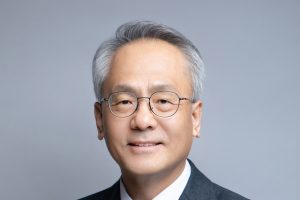
Samyang Biopharm supplies more than half the world’s bulk surgical suture threads. Now it wants to use the same expertise in biodegradable polymers to deliver gene therapies. President and CEO Dr Kyungjin Kim, who previously helped turn ST Pharm into a leading oligonucleotide CDMO, explains how the company’s SENSTM platform aims to solve the delivery problems holding back the field, and why he believes Samyang can rank among the top players in gene therapy delivery within five years.
What motivated you to join Samyang Biopharm, and how has your previous experience shaped your vision for its future?
I had initially intended to retire after leaving ST Pharm, but I decided to join Samyang Biopharm because I recognised its tremendous potential, particularly its strong scientific foundation in polymer technologies and drug delivery systems. We have three core business areas, beginning with medical devices, which represent our main source of revenue. We are the world’s leading supplier of bulk surgical suture threads, with more than 50 percent of the global market and over 200 customers across more than 50 countries. Our second business is specialty oncology pharmaceuticals, with a portfolio of 11 marketed products, including paclitaxel (Genexol PM), one of our flagship medicines developed using proprietary polymeric micelle technology. Unlike conventional paclitaxel formulations, Genexol PM does not contain Cremophor EL, a solvent associated with hypersensitivity reactions, thereby avoiding solvent-related toxicity and offering potential tolerability benefits for patients. However, what particularly attracted me was our third area, drug delivery technology, where we have accumulated more than two decades of expertise and which I believe offers considerable opportunities for innovative drug development.
I recognised a similar opportunity when I joined ST Pharm in 2013, at a time when it was primarily a CMO specialising in small-molecule APIs. My vision was to transform it into a CDMO, with a stronger focus on oligonucleotides, particularly small interfering RNA (siRNA) and antisense oligonucleotides (ASOs). Over the following years, we expanded our capabilities and established ST Pharm as one of the leading global players in this field. We also began developing mRNA platform technologies in 2018, well before the COVID-19 pandemic, including proprietary capping and lipid nanoparticle technologies, which subsequently enabled us to expand into mRNA development and manufacturing. Samyang Biopharm operates under a different model, combining medical devices, finished pharmaceutical products and proprietary drug delivery technologies, alongside specialised manufacturing capabilities for cytotoxic oncology medicines at our Daejeon facility. Nevertheless, I saw the same opportunity to build on a strong scientific foundation and translate it into innovative medicines. Korea has many talented scientists and considerable research expertise, but turning promising science into commercially viable treatments remains a challenge, and this is where I believe my experience can make a difference.
I consider myself fortunate to have worked across almost the entire pharmaceutical value chain, beginning with early-stage drug discovery and development at Roche, moving into contract development and manufacturing at ST Pharm, and now working with finished pharmaceutical products at Samyang Biopharm. This experience has given me a comprehensive understanding of the process, from initial research through to manufacturing and commercialisation, and reinforced my belief in the importance of translating scientific innovation into treatments that reach patients. My ambition is therefore to build on our established businesses and longstanding expertise in drug delivery, while shifting our focus towards innovative drug discovery and development, particularly in gene therapeutics. That is the next chapter I want to help shape at Samyang Biopharm.
How does Samyang Biopharm’s spin-off from Samyang Holdings change its strategic direction and ability to pursue new opportunities?
The year 2025 marked an important turning point for us. Although Samyang Biopharm had considerable potential, operating within Samyang Holdings, whose primary role is to oversee the group’s businesses and investments, was not necessarily suited to the pace and specific demands of biotechnology. Our chairman and senior management therefore strongly supported the spin-off, giving us greater autonomy to make decisions, pursue new opportunities and accelerate our development of innovative medicines. This transition reflects the broader vision of Samyang Group, which was founded in 1924 and has since built a strong presence across chemicals, food, packaging and biopharmaceuticals. What I find particularly impressive is that, even after more than a century, our leadership continues to look ahead, seeking new opportunities beyond our established businesses. Across the group, we are moving towards higher-value specialty markets, from advanced materials and specialty solutions in chemicals to innovative therapeutics in biopharmaceuticals. I fully share this vision, and it was one of the reasons I decided to join Samyang Biopharm.
Our strategy is to consolidate and expand our existing businesses while identifying new opportunities for long-term growth. Medical devices remain our main source of revenue, while in pharmaceuticals, we are strengthening our specialty oncology portfolio, particularly cytotoxic medicines and modified formulations. Building on several decades of expertise in drug delivery, we now want to take our capabilities further by leveraging our proprietary SENSTM platform to develop innovative gene therapeutics for diseases with significant unmet medical needs. This ambition also reflects my own background in drug discovery and development, where my motivation has always been to translate scientific advances into new treatments that can improve and save patients’ lives. For me, the next chapter of Samyang Biopharm is about building on the strengths we have established while applying our technologies to new therapeutic modalities that can make a meaningful difference for patients.
What are the main challenges facing gene therapeutics, and how is Samyang Biopharm’s SENSTM platform positioned to address them?
Gene therapeutics remains an extremely promising field, although translating that potential into successful medicines has proved more difficult than many anticipated. Despite more than three decades of research, relatively few products have reached the market, largely because of the challenges surrounding safety, manufacturing costs and clinical development. Investment in cell and gene therapies peaked at approximately USD 23 billion in 2021 before declining significantly, but recent advances in in vivo CAR-T therapies have renewed interest, attracting substantial investment from major pharmaceutical companies. I see this as part of a broader evolution, from what I call Gene Therapy 1.0, involving the modification of cells ex vivo, to Gene Therapy 2.0, where genetic material is delivered directly into the body, and ultimately Gene Therapy 3.0, which focuses on cellular programming. This shift is particularly exciting because it could fundamentally change how we approach the treatment of many diseases.
One of the biggest obstacles, however, remains the delivery of genetic material. The success of mRNA COVID-19 vaccines demonstrated the potential of lipid nanoparticles (LNPs), but conventional formulations still have important limitations, particularly their tendency to accumulate in the liver following systemic administration. Repeated dosing can also be complicated by immune responses to components such as polyethylene glycol (PEG), potentially affecting the effectiveness of subsequent treatments. These challenges become especially relevant in oncology, autoimmune diseases and other conditions where we need to reach specific cell populations and may require repeated administration. For me, the next generation of delivery systems must therefore address three priorities: enabling repeat dosing, minimising unwanted immune responses and achieving much greater selectivity. Although technologies such as selective organ targeting LNPs (SORT-LNPs) have shown encouraging results, balancing precise delivery with safety remains difficult. This is what impressed me about Samyang Biopharm’s SENS (Selectivity Enabling NanoShell) platform, which builds on our longstanding expertise in polymer technologies to pursue more selective, non-viral delivery.
Importantly, reaching the right organ is only part of the challenge, as we also need to deliver genetic material to the appropriate tissues and cells. In the lungs, for example, targeting pulmonary endothelial cells could offer opportunities in idiopathic pulmonary fibrosis (IPF), whereas epithelial cell delivery could support treatments for cystic fibrosis (CF). Similarly, reaching the brain is not sufficient unless we can deliver the therapeutic material to the relevant regions and cell populations. This level of selectivity is becoming increasingly important as the industry advances towards more sophisticated modalities, including base editing and epigenetic editing. Since joining Samyang Biopharm, I have met with more than 100 biotechnology companies worldwide, including those seeking alternatives to viral vectors and others developing promising genetic payloads that require more effective delivery systems. We are now working closely with several US biotechnology companies to explore potential applications of SENSTM. I believe that combining non-viral delivery with greater tissue and cellular selectivity could represent a significant advance in in vivo gene therapeutics.
Where does the development of your SENSTM platform currently stand, and which milestones will be critical in demonstrating its potential?
Unlike an established CDMO business, where manufacturing capacity and regulatory credentials provide a clear basis for commercial discussions, a new drug delivery platform must first demonstrate its capabilities through proof of concept. We are therefore pursuing a two-track strategy, combining the development of our own therapeutic assets with collaborations involving biotechnology companies that have promising genetic payloads but need effective delivery technologies. Internally, we are advancing two lung-related programmes targeting IPF and CF, with both programs already receiving support from the Korea Drug Development Fund (KDDF). These programmes will help us generate the preclinical evidence needed to demonstrate the potential of SENSTM in specific indications, while external partnerships will allow us to explore its applications across different therapeutic modalities.
Although we are still at an early stage, development is progressing rapidly, and our objective is to complete proof-of-concept studies, including initial toxicology assessments, and prepare the IND-enabling package for our lead programme by the end of 2027. This could allow us to initiate a Phase I clinical trial in 2028. In parallel, we are collaborating with a US biotechnology company on a programme using SENSTM, with a similar development timeline, although I cannot disclose further details at this stage. Our ambition is to have one or two programmes, including both internally developed assets and collaborative projects, entering Phase I clinical trials in 2028 or 2029. We recognise that these are ambitious targets, but combining internal development with strategic partnerships will be essential to demonstrating the platform’s capabilities and establishing its broader therapeutic potential.
How is Korea’s regulatory environment influencing your clinical development strategy, and what is your vision for expanding Samyang Biopharm’s global presence?
Regulation remains one of the major challenges for Korea’s biotechnology industry, particularly in gene therapeutics, where regulatory requirements are still quite stringent. Many Korean companies are therefore considering clinical development in other markets, including Japan, China and Europe. Although the current government has expressed a strong commitment to accelerating the development of the biotechnology sector, regulatory change takes time, and this is something we need to consider as we work towards entering Phase I clinical trials in 2028. We are already engaging actively with potential partners in Japan, where I have been particularly encouraged by the openness of biotechnology companies to new approaches in gene therapeutics, as well as in China and the United States. Our goal is not simply to develop new medicines for the Korean market, but to address unmet medical needs globally. If our SENSTM platform can help bring innovative treatments to patients, we should be prepared to pursue those opportunities wherever the regulatory environment and development conditions are most favourable.
Samyang Biopharm already has a strong international presence in medical devices, particularly in bulk absorbable surgical suture threads, where we hold more than 50 percent of the global market. We now want to build on that foundation by expanding our specialty oncology pharmaceutical business internationally, while positioning gene therapeutics as a major driver of future growth. Our office in Cambridge, Massachusetts, provides an important base for strengthening relationships with biotechnology companies and exploring collaborations around SENSTM, and we are taking a flexible approach to partnerships, with out-licensing as an initial priority alongside opportunities for co-development and joint ventures. We are already working closely with a US biotechnology partner, and my ambition is for Samyang Biopharm to become a leading provider of drug delivery platform solutions for gene therapeutics. When I became CEO of ST Pharm, I said we could become one of the world’s top three oligonucleotide CDMOs, although many people were sceptical at the time. Seeing what ST Pharm has achieved since then remains a source of great pride for me, and I have a similar ambition for Samyang Biopharm: within the next five years, I want us to rank among the world’s top three or four players in drug delivery technologies for gene therapeutics.
How are you balancing investment in innovation with the growth of your established businesses, particularly as you explore opportunities in medical aesthetics?
I would say my curiosity is 80 percent science and 20 percent business, but as CEO, I have to find the right balance between the two. I work closely with our R&D leadership and business units to ensure that we continue pursuing innovative drug development while strengthening the established businesses that support our growth. Medical devices remain our main source of revenue, but beyond that, I see two areas with particularly strong potential: medical aesthetics and gene therapeutics. Both build on our longstanding expertise in biodegradable polymers, which has been central to our surgical sutures business for decades and provides a strong scientific foundation for expanding into new, higher-value applications.
Medical aesthetics is an important part of this strategy, particularly through Croquis, our polydioxanone (PDO)-based lifting threads, and Lafullen, our polycaprolactone (PCL)-based injectable filler. Unlike conventional hyaluronic acid (HA) fillers, which primarily restore volume and are gradually absorbed by the body, PCL-based fillers also stimulate collagen production through a localised tissue response, helping to sustain their effects over a longer period. Our expertise in biodegradable polymers allows us to adjust properties such as degradation rates, giving us an advantage in developing differentiated products. With the growing international popularity of K-beauty, we see considerable opportunities for expansion, although medical aesthetics is a more specialised field than conventional cosmetics, requiring substantial scientific expertise and regulatory preparation. We have already secured European certification for our aesthetic products, alongside approvals in markets such as Brazil, and are pursuing further registrations, particularly in China, where we are targeting approval around 2028. These processes can take five or six years, so we have been preparing for some time, and I believe medical aesthetics could eventually develop into a larger, potentially separate business unit.
There is also growing interest in combining complementary aesthetic technologies, including botulinum toxin, HA fillers and polymer-based collagen stimulators, and several industry executives have approached me about potential business combinations. What I find particularly interesting, however, is the connection between our different businesses and how they have evolved from the same technological foundation. We began with surgical sutures, expanded into lifting threads and biodegradable polymer-based fillers, and are now applying that expertise to gene therapeutics through our SENSTM platform. Unlike conventional LNPs, SENSTM uses a polymer–lipid hybrid formulation combining proprietary ionisable lipids with biodegradable polymers, designed to improve stability and tolerability, minimise unwanted immune responses, support repeated administration and enable more selective delivery to different tissues beyond the liver. Although these businesses may appear quite different, they share a common scientific foundation, allowing us to build on our established commercial strengths while pursuing new opportunities in innovative medicine.
As Samyang Biopharm looks towards the next generation of gene therapeutics, what capabilities and emerging technologies will be most important to its future development?
We currently have around 400 employees, including approximately 70 in R&D, and one of our greatest strengths is the scientific expertise we have built in Korea, particularly in polymer chemistry, drug delivery systems, formulation development and manufacturing. This foundation has been instrumental in developing our SENSTM platform, and we intend to continue building on it as we expand into gene therapeutics. However, Korea still has a relatively limited pool of specialists in some of these emerging fields, which is why our immediate priority is to collaborate with biotechnology companies that have strong scientific capabilities, particularly in the United States. Over the longer term, as our programmes progress towards commercialisation, we may also consider establishing an R&D team in the US to support the next stage of our development.
Beyond delivery systems, I believe the next major challenge will be the therapeutic payloads themselves. We are currently focusing on mRNA, but the field is evolving rapidly, with growing interest in circular RNA, base editing, epigenetic editing and potentially tRNA-based approaches. I have direct experience with circular RNA from my time at ST Pharm, when we established Levatio Therapeutics in San Diego to develop a platform in this area. Although I recognise its potential, I remain somewhat cautious about the excitement surrounding emerging modalities, particularly because demonstrating a technology in the laboratory is very different from manufacturing it at scale under GMP standards. Production, purification and consistent product quality remain significant challenges, and these practical considerations are just as important as the underlying science.
Another critical question is how we control the activity of these therapies once they have been delivered. Technologies such as circular RNA and self-amplifying RNA (saRNA) can potentially sustain protein expression for extended periods, which may be beneficial, but what happens if that expression becomes excessive or lasts longer than intended? How do we regulate it, or stop it if necessary? For me, the next stage of gene therapeutics is not simply about delivering genetic material more effectively, but also about controlling its expression and the behaviour of the cells receiving it. This is what I mean by Gene Therapy 3.0, moving towards more precise and controllable cellular programming through in vivo approaches. Although our immediate focus remains on advancing SENSTM as a selective delivery platform, some of our researchers are already exploring these emerging payloads and mechanisms of cellular regulation. It is a field that continues to fascinate me, and perhaps it shows that, even as CEO, I am still 80 percent scientist and 20 percent businessman.
What principles have guided your career, and what message would you like to leave with the industry?
The happiness and well-being of our employees and colleagues have always been very important to me, alongside our responsibility to the patients who ultimately depend on the medicines we develop. At ST Pharm, I helped reshape our vision around innovation and saving lives, and I have brought that same philosophy to Samyang Biopharm. Korea has many talented scientists and a strong research foundation, but too often, promising discoveries remain at the research stage rather than progressing towards practical applications. Academic research and scientific publications are essential, and I personally still enjoy contributing to them, but the pharmaceutical industry has a different mission. Our ultimate goal is not simply to conduct research or publish papers, but to translate scientific advances into new medicines that reach patients, particularly those with significant unmet medical needs. That is what motivates me, and it is the responsibility I believe we must always keep at the centre of our work.


