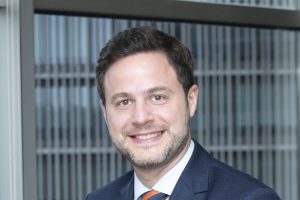
40 years into GSK's presence in South Korea, the affiliate is taking on a broader role in the group's global ambitions. General Manager Gunnar Riediger discusses the strategic choices behind its expansion in oncology and haematology, the complexities of bringing innovative medicines to Korean patients, and the country's potential as a source of global pharmaceutical innovation. Against the backdrop of a rapidly ageing population, he also challenges the traditional approach to healthcare.
What attracted you to South Korea after your experience in Latin America, and how have you approached this new chapter in your career?
Moving to South Korea was a very interesting opportunity for me, both personally and professionally. Coming from Latin America, the prospect of working in Asia, particularly in a market as established and sophisticated as Korea, represented a new challenge. It meant moving from an emerging-market environment to a very different healthcare landscape, and despite the geographical and cultural distance between the two regions, that opportunity to broaden my experience was precisely what attracted me.
At the same time, there are important connections between these markets, particularly when it comes to our purpose at GSK. Regardless of the geography, market environment or therapeutic area, our ambition is to generate a meaningful impact for patients. GSK’s broad presence across different therapeutic areas allows us to pursue that ambition in many ways, and I think that combination of a new professional challenge and a shared sense of purpose was central to my decision to come to Korea.
How is GSK Korea adapting its priorities to the company’s transformation, and where does the affiliate stand within the global organisation?
I think it comes down to making choices, sometimes bold ones, about where we focus our resources and investments. This year marks GSK’s 40th anniversary in Korea, providing an opportunity to reflect on the contribution our teams have made to the country’s healthcare system over four decades. Being recognised among Korea’s top 20 Best Workplaces in 2025 also reflects the culture our people have built over the years. While it is important to acknowledge these achievements, this milestone is equally an opportunity to look ahead and consider how our strategy must evolve alongside GSK’s broader transformation.
Following the separation of our consumer healthcare business, we have become a more focused biopharma company, with significant investment in innovation across oncology, respiratory diseases, immunology and inflammation, HIV and infectious diseases. We now have more than 55 medicines and vaccines in development globally, while ViiV Healthcare, our majority-owned specialist company, continues to advance HIV prevention, treatment and research towards a cure. Vaccination is another area particularly close to my heart, having worked in this field for many years. I strongly believe in prevention, and scientific advances are expanding the value of vaccination beyond childhood to adolescents, adults and older populations. This is about preventing disease, but also improving quality of life and demonstrating that broader value to patients, governments and healthcare systems.
Within GSK’s global structure, comprising the US, Europe and International regions, Korea ranks among our top ten affiliates in the International region. We have a substantial presence, with approximately 475 employees as of January 2025 and a portfolio spanning general medicines, vaccines, specialty care, HIV and oncology, including our more recent launches. Beyond its commercial potential, Korea also has an important role to play in our global R&D activities, making it a strategically significant affiliate both for the patients we serve locally and for GSK’s wider ambitions.
What role does vaccination play in GSK Korea’s approach to prevention, and how are you engaging healthcare stakeholders on its wider value?
We have a long history of collaboration with Korean health authorities, with several of our vaccines contributing to the country’s immunisation programmes over the years. Building on that foundation, our discussions with healthcare professionals, medical societies, policymakers and payers increasingly focus on demonstrating the broader value of vaccination through scientific evidence and health economic analyses. Beyond preventing infectious diseases, we need to consider the impact on patients’ quality of life, the burden on caregivers and the costs to healthcare systems. Conditions such as shingles and RSV infection illustrate why these wider considerations are essential when assessing the benefits of prevention.
I often use an analogy when discussing vaccination. We tend to talk about healthcare systems, but many still operate more as sick-care systems, focused on treating diseases rather than preventing them. I believe vaccination has a fundamental role to play in shifting that approach towards genuine healthcare. For me, it is not simply about the vaccine as a product, but about reaching people through vaccination and recognising the broader benefits that prevention can bring to patients, society and healthcare systems. This is the message we are working to convey to policymakers and payers, particularly as governments weigh public health needs against the economic realities they face.
Korea offers a favourable environment for these discussions, thanks to its highly educated population and the longstanding emphasis its health authorities have placed on immunisation. While vaccine hesitancy is a growing concern in many parts of the world, the scientific and historical evidence of vaccination’s contribution to public health is undeniable. A study led by the WHO estimated that immunisation has saved at least 154 million lives over the past 50 years, underscoring the role vaccines have played in improving life expectancy. Korea’s high childhood vaccination coverage reflects the success of its immunisation policies and provides a strong foundation for extending the benefits of vaccination to other age groups.
How has the expansion of GSK’s oncology and haematology portfolio shaped the development of your Korean organisation?
We have been very intentional about where we focus our resources, particularly as oncology and haematology are major areas of investment for GSK. Our Korean organisation is structured around four commercial business units: vaccines, oncology, specialty care infectious diseases, and specialty care respiratory and general medicines. The development of our oncology organisation was already underway when I arrived last year, but we have since been strengthening its structure, presence and capabilities to support our expanding portfolio, including the introduction of momelotinib (Omjjara) for myelofibrosis and the April 2026 launch of belantamab mafodotin (Blenrep) for multiple myeloma.
Beyond expanding our resources, we recognise that oncology and haematology require a different approach, particularly given the complexity of the patient journey. We are therefore looking at how we can better support patients from diagnosis throughout their treatment, identifying the hurdles and gaps they encounter and finding ways to address them. The medicine itself is only one part of that journey, and we want to ensure that our organisation has the capabilities to respond to patients’ broader needs. This is an important part of how we are approaching our growth in these therapeutic areas.
What have your recent experiences taught you about the realities of introducing innovative medicines in the Korean market?
Coming from Latin America, one of my first impressions was how well-developed Korea’s healthcare system is, from the quality of its hospitals to the expertise of its healthcare professionals. The authorities have done an impressive job of building a system that offers patients a high standard of care. Nevertheless, the challenge with innovation is ensuring that it reaches the people who need it, because developing a new treatment only fulfils its purpose when patients can benefit from it. Korea has a well-established regulatory and health technology assessment framework, beginning with approval by the Ministry of Food and Drug Safety (MFDS), followed by reimbursement assessment through the Health Insurance Review and Assessment Service (HIRA), pricing negotiations with the National Health Insurance Service (NHIS) and final reimbursement listing overseen by the Ministry of Health and Welfare (MOHW). Navigating this process requires us to demonstrate the clinical and economic value of our medicines while engaging closely with the relevant stakeholders.
We have made encouraging progress, including expanded reimbursement in 2025 for dostarlimab (Jemperli), our PD-1 inhibitor for eligible patients with advanced or recurrent endometrial cancer, followed in 2026 by reimbursement for the autoinjector formulation of mepolizumab (Nucala) in severe eosinophilic asthma and momelotinib (Omjjara) in myelofibrosis in June. These milestones demonstrate that meaningful progress is possible, although market access remains a challenging process. Governments and payers must make difficult decisions about which innovations to incorporate, considering patient needs, disease burden and the financial implications for the healthcare system. I believe that when we bring strong evidence to the table and engage in constructive dialogue, we can find ways to ensure that innovation reaches patients and delivers meaningful value to the healthcare system.
Where do you see Korea’s main strengths as a clinical research market, and what opportunities exist to deepen its contribution to global innovation?
Korea has become an important market for our clinical development activities, with 60 research projects involving 5,838 Korean patients in 2025, supported by KRW 31.7 billion in local R&D investment. As one of our 27 R&D-intensive countries globally, Korea offers several advantages, starting with its impressive healthcare infrastructure and the concentration of patients in its leading hospitals, which makes it easier for physicians to identify suitable participants for clinical trials. The regulatory environment is another important factor, with the MFDS providing a well-established framework and a standard review period of 30 working days for clinical trial applications. While there is always room to accelerate approvals, Korea remains competitive compared with other markets. Above all, the expertise of Korean physicians and researchers, who are highly regarded internationally, is a major strength. Clinical development inevitably involves risk, and not every programme succeeds, but having that level of scientific expertise makes a real difference.
Looking ahead, we also see opportunities to strengthen Korea’s contribution to GSK’s global innovation pipeline. I firmly believe that innovation is geographically agnostic and can come from anywhere, which is reflected in our approach to business development. In 2025, we invested £6.6 billion in R&D globally and announced 14 new partnerships and acquisitions, while more than half of the assets in our pipeline have come through business development. We already have collaborations across markets such as the US, Canada and China, and Korea’s emerging biotech ecosystem offers further potential. One of our priorities is to expand our engagement with local innovators, explore opportunities for partnership and find ways to bring promising Korean innovations into GSK’s global organisation, helping them reach patients around the world.
How are you building stronger connections between Korea and GSK’s global organisation, and what role do local partnerships play in this effort?
Korea is already well recognised within GSK, both for its contribution to our clinical development programmes and for the innovation emerging from the country. Our global leadership understands that potential, but we want to keep reinforcing these connections by encouraging senior leaders to visit Korea and engage directly with local experts and biotech companies. An important part of this effort is ensuring that the opportunities we identify are aligned with our global R&D priorities and the scientific platforms we have chosen to focus on. This year, for example, our Chief Patient Officer spent several days in Korea meeting potential partners, while our Head of Oncology Development visited two years ago to explore opportunities. These interactions help us connect the innovation taking place in Korea with our broader development agenda and identify areas where we can collaborate.
Partnerships have also been an important part of our presence in Korea over the past four decades, spanning both manufacturing and commercial activities. Samsung Biologics is a significant partner, with a manufacturing collaboration dating back to 2020, when we signed an agreement worth more than USD 231 million, initially covering belimumab (Benlysta), our treatment for lupus. That relationship has since expanded to support two major specialty care assets. On the commercial side, we work with three co-promotion partners and a network of 60 wholesalers, alongside contract sales organisation arrangements that allow us to draw on local expertise and established relationships with healthcare professionals. One example is our collaboration with GC Biopharma and Kwangdong Pharmaceutical on the co-promotion of Shingrix, our shingles vaccine. We have similar partnerships across respiratory care, central nervous system disorders, and adult and paediatric vaccination, some extending over more than a decade. In many cases, working with partners who already have the expertise and connections within a particular therapeutic area allows us to reach healthcare professionals more effectively than we could on our own.
What opportunities are you creating for Korean talent within GSK’s international network, and how has your leadership evolved over two decades with the organisation?
We have excellent talent in Korea, and we are creating opportunities for our people to gain experience in regional and global roles, while also bringing that expertise back to the local organisation. A good example is our recently established Specialty Care Infectious Disease Business Unit, reflecting our growing focus on areas such as HIV, liver diseases and other infectious diseases. We were able to bring back a Korean colleague who had been working with our global vaccines team in London to lead this new unit, illustrating the positive cycle of talent development we have at GSK. We also have Korean colleagues working in Denmark and within our global specialty care team, while another recently moved to Singapore to lead a business unit. This reflects the quality of talent we have in Korea and our commitment to providing opportunities across different markets and functions, allowing people to contribute both locally and internationally.
In many ways, my own career reflects that same approach. Over my 23 years with GSK, I have worked across different geographies and functions and experienced several phases of transformation, investment and strategic refocusing. What has kept me motivated is the strong connection between the organisation’s mission and my personal values, particularly its consistent ambition to make a positive impact on patients. From a leadership perspective, I believe in taking bold decisions, accepting risks and holding ourselves accountable for the impact we create, while fostering an environment where people can make mistakes, learn from them and keep moving forward. That openness is essential to innovation, as is the commitment to doing the right thing. These principles have remained important to me throughout my career, and I believe that when you genuinely connect with an organisation’s purpose, it brings a sense of authenticity to your work and to the way you lead others.
Looking ahead to the next three to five years, what would you most like GSK Korea to achieve?
My fundamental priority is to ensure that our innovations reach the patients who need them, because that is ultimately why we are here as an organisation and what our teams work towards every day. This is particularly important in areas where significant unmet medical needs remain, making it even more urgent to bring innovative treatments to patients. I would also highlight the importance of advancing life-course immunisation, especially given Korea’s demographic evolution. South Korea officially became a super-aged society in December 2024, when people aged 65 and older accounted for 20 percent of the population, a figure that has since exceeded 21 percent and is projected to reach 30 percent by 2036. As the population continues to age, we need to consider how best to protect older adults and help people remain healthier for longer. I believe life-course vaccination has an essential role to play in addressing this challenge, and we are keen to support the Korean government in advancing this agenda as part of the broader shift from a sick-care system towards one that places greater emphasis on prevention and healthcare throughout people’s lives.


