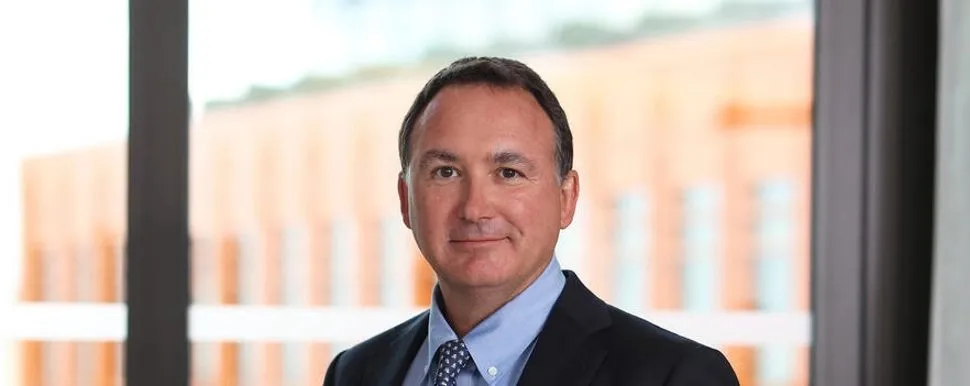

Seven months into the job as CEO of GSK, Luke Miels has moved faster and bigger than most expected. Having laid out an M&A strategy based around small bolt-ons at the start of the year, Miels then ripped up his own rule book with the USD 10.6 billion acquisition of US biotech Nuvalent in July. Stock prices are up 29 percent, but with a patent cliff looming for a key HIV product, will new launches in oncology and a cost-cutting programme be enough to deliver on his ambition of GBP 40 billion (USD 54 billion) in sales by 2031?
What could be seen as a low-profile internal appointment after the departure of Emma Walmsley, Australian Miels previously served almost a decade as GSK’s Chief Commercial Officer. Walmsley poached him from British rivals AstraZeneca in 2017; a messy process that led to a legal dispute between Miels and AZ CEO Pascal Soriot.
Under activist pressure to break up the company and with a thin late-stage pipeline, Walmsley tasked Miels with working alongside R&D to accelerate in-house development and move faster on bolt-on acquisitions.
During his nine years as CCO, GSK transformed from a diversified (some would say bloated) conglomerate into a more focused biopharma – spinning off its consumer healthcare arm as Haleon in 2022, while building out a vaccines and specialty medicines franchise anchored by Shingrix (2017) and Arexvy (2023) and growing its HIV portfolio through ViiV Healthcare.
On becoming CEO in January, he inherited a company no longer in crisis, but with a fuller pipeline and with revenue growth of seven percent last year to around USD 45 billion.
Product-Centricity & Scientific Courage
Although Miels was the seemingly unopposed continuity candidate (his appointment was announced on the same day as Walmsley’s resignation), GSK under his watch does have some key differences to the era of his predecessor.
For one, he has called for the company to become more “product-centric,” with all employees – whether in R&D, manufacturing, commercialisation, or administrative functions – thinking more about how their role impacts producing medicines and vaccines that impact patients.
“When you look at the level of communication, discussions, focus time that a company spends, I want to really see that to be massively dominated by products,” he said in his first earnings call.
Product-centricity is a long-held belief for Miels. In a 2023 podcast interview while still CCO, his top advice for those working in pharma was to be “obsessed with products.” He also described the ideal dynamic between R&D and commercial as a “positive tension:” too much R&D influence produces science that isn’t clinically meaningful while too much commercial influence produces me-too drugs nobody needs.
Miels has also discussed wanting more “scientific courage” within the company, i.e., faster, more agile R&D risk-taking than under Walmsley. Miels will be hoping that GSK’s recently announced USD 539 million new global R&D centre on the Cambridge Biomedical Campus will bolster this ambition.
“This investment will accelerate our R&D and help us deliver new, competitive products,” said Miels in a press release. “It integrates GSK further into one of the world’s leading centres of knowledge and demonstrates the attractiveness of the UK’s life sciences ecosystem.”
Dealmaking & Pipeline
Whether Miels can translate this philosophy into multiple new products is the question. The signs are promising: the company thinks it can move at least 20 molecules into late-stage trials this year and will also launch long-acting respiratory disease biologic Exdensur, multiple myeloma antibody-drug conjugate Blenrep, and ROS1 inhibitor for lung cancer Jideytro.
The launch of Jideytro – GSK’s first ever lung cancer drug – is the most immediate impact of the massive USD 10.6 billion acquisition of American biotech Nuvalent Biosciences in July. The FDA is also set to decide on Neladalkib, an ALK inhibitor developed by Nuvalent, by the end of November.
This deal – GSK’s largest biotech acquisition in more than 25 years – came somewhat out of the blue, given that Miels set out a business development approach in February focused on areas where “the science is reasonably established;” meaning smaller bolt-ons in the low billions with products that can improve on existing treatments.
On this front, GSK brought in Rapt Therapeutics and its food allergy reaction drug that targets the same epitope as Novartis and Roche’s Xolair for USD 2.2 billion earlier this year. It also spent USD 950 million on Canadian biotech 35Pharma, which has a potential rival to Merk & Co. (MSD globally)’s pulmonary hypertension drug Winrevair.
Miels will be hoping that the Nuvalent deal can aid GSK’s push to build a cancer business that can compete with larger rivals. He described the two late-stage assets as potentially “best in class.” An already cut-throat oncology field is set to get even more challenging for GSK if the recently proposed mega-merger between AstraZeneca and BMS goes through.
Elsewhere, Exdensur represents the company’s biggest new bet in respiratory disease. A long-acting biologic for COPD approved by the FDA as an add-on therapy for severe eosinophilic asthma in Q4 2025, GSK has three more Exdensur trials underway targeting broader indications.
Patent Expiries, Vaccine Sceptics and Cost Savings
Looming over Miels’ growth ambitions is the loss of patent for the HIV drug dolutegravir. GSK’s biggest-selling product, dolutegravir accounted for almost 20 percent of group sales last year and starts losing patent protection in 2028-2030. Current guidance calls only for margins to stay “stable to improving” through that window, not to grow.
On vaccines, Miels will be hoping that challenges to longstanding paediatric vaccination practice in the US, led by Secretary of Health and Human Services Robert F. Kennedy Jr. will continue to only have a “manageable” impact on its US business.
In addition to revenues from new launches, Miels has launched a three-year cost savings programme targeting around USD 2.6 billion in annual cuts by 2029. These cuts draw on procurement, frontline sales restructuring, AI efficiencies and a leaner manufacturing footprint, although he has thus-far been tight lipped on the total number of redundancies they will entail.
Future Prospects
GSK’s most recent readouts are positive for Miels, with Q2 2026 results beating forecasts on both sales and profit and shares rising between three to four percent on the day. Growth was broad-based: Specialty Medicines (respiratory/oncology/immunology) was up 14 percent, the HIV franchise up 10 percent on the strength of long-acting injectables Cabenuva and Apretude, and Vaccines up eight percent.
The fly in the ointment was the General Medicines division, which fell by nine percent. Most significantly, Camlipixant, a chronic cough drug analysts had pegged as GSK’s key 2026 catalyst, failed its Phase 3 trials and was shelved, representing a USD 1.8 billion writedown on top of the USD two billion GSK originally paid for it in 2023.
Miels will be hoping to avoid similar climbdowns with its newly bolstered oncology portfolio over the coming years, especially given the loss of revenue from dolutegravir’s patent expiry. Some analysts are suggesting that without a concrete plan for closing that gap, the GBP 40 billion 2031 target remains an aspiration rather than a forecast.