

Five conferences, anxiety spreading across five continents, one unmistakable pattern: the global pharmaceutical industry is transforming at a dizzying pace. From Philadelphia to Geneva, from Istanbul to Chicago and London, the Shawview Consulting team picked up the same recurring threads in every panel and hallway conversation: AI and real-world data are advancing by leaps and bounds, outpacing the regulatory frameworks meant to govern them; China has established itself as a genuine innovation powerhouse rather than a mere follower; and a geopolitical realignment is turning the “external environment” from a secondary factor into the main character. The 2030 health targets keep slipping further away, and a coordinated global health agenda remains elusive — but for companies willing to build strategies around uncertainty, rather than in spite of it, there is opportunity within this transformation.
“Our reliance on randomised clinical trials is really harming our ability to deliver personalised precision medicine.”
Jennifer Goldsack, CEO, Digital Medicine Society, HTAi, June 2026
“In an uncertain environment, we need to do more to protect the value of science.”
Lotte Steuten, President-Elect, ISPOR, ISPOR 2026, Philadelphia
To say that the pharmaceutical industry, the global health agenda, and the market access environment for companies is in a state of flux right now is an understatement.
Even for experienced people in the industry, the current scope and rate of disruption and rapid change is unprecedented. AI, RWE, and RWD are advancing faster than the governance and validation frameworks needed to use them responsibly, China’s rapid rise as a major player in the global pharma market, geopolitical tensions between East and West, and the upending of the global pricing system have all been key points of discussion, debate and disagreement around the world.
Amidst all this, the 2030 Sustainable Development Goals in health are slipping out of reach, and that the opportunity to build a coordinated, 21st-century global health agenda is being missed
Attending a swathe of recent international health, economics and clinical conferences in different parts of the world in recent months has revealed several recurring themes that are disrupting global pharmaceutical markets.
This year the Shawview Consulting team attended five conferences on the global health and market access calendar of the global pharmaceutical industry in just a few weeks: ISPOR in Philadelphia, World Health Assembly in Geneva, HTAi in Istanbul, ASCO in Chicago, and the Financial Times ‘Scaling Competitive Pharma in Europe’ event in London.
When we all got back to the office and compared notes, we were struck by the similarity of the discussions across the fora. These stem from broader geopolitical, economic, demographic and structural shifts in the global environment, as well as major changes in technological and business models occurring within the pharma industry itself.
RWE, RWD and AI racing faster than their guardrails
In many panel discussions and fora across the conferences, there is a sense that the use and value of real world evidence, real world data, and the use of artificial intelligence in assessing this has come of age. A recurring theme was whether the world, the pharma industry and HTA evaluation systems are ready for the disruptive effects of AI, real world evidence (RWE) and real world data (RWD).
The technology is already here, but we don’t know how to manage it.
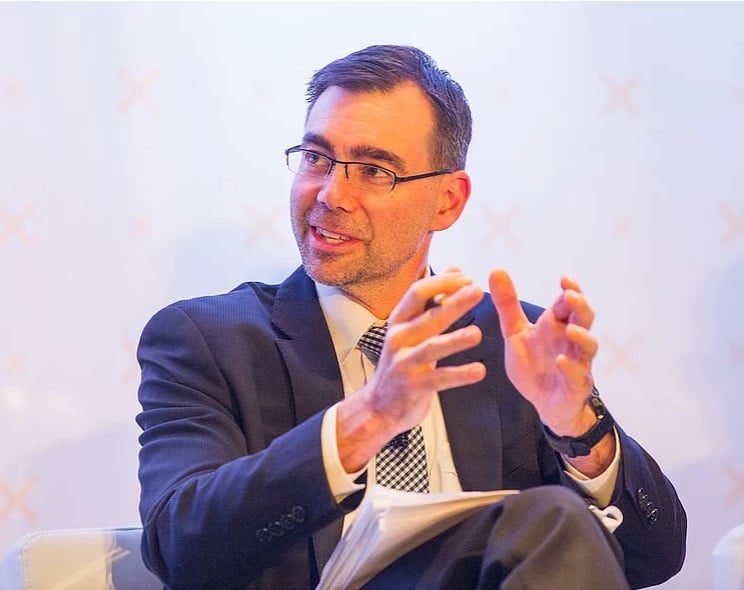
Jennifer Goldsack, herself a cancer patient, former Olympian and CEO of Digital Medicine Society gave a stirring opening Keynote Address at HTAi that challenged payers, evaluators and the private sector to get ready for the opportunities data and digital technologies provide to treat patients in the 21st century.
Her comments reflect a recurring theme across several conferences; namely that unlike 20 or 30 years ago, today we have the technology and tools to do high-level data analysis and evaluation of medical technologies and treatments. The issue is not the technology or the ability to do it, but our governance, ethics, decision making and preparedness as a health community to use these digital tools to improve health care for patients.
Building real personalised precision medicine, putting patients in the centre of HTA systems, providing the necessary investment to transform health systems and boost productivity, and reforming HTA systems to be fit for purpose for the 21st century all featured in many discussions across the days in Chicago, Geneva, London, Istanbul and Philadelphia.
AI is obviously the ‘feature’ or ‘fad’, depending on your point of view, but its enablement of many things in valuing health systems and medical technologies has a long way to go.
ISPOR’s CEO, Rob Abbott, opened the ISPOR conference by framing the moment as one where the health economics and outcomes research field must take a more active leadership role in shaping health policy. He introduced a cycling-inspired framework – information, position, speed, gear, and acceleration – to think about how the field should navigate a fast-changing, increasingly complex policy environment. He urged attendees to assess whether they’re gathering the right information and moving at the right pace.
Health economics and outcomes research is undergoing a rapid, practice-led shift toward AI-native workflows, with formal guidance still racing to catch up. Agentic AI is now used to generate not just analyses but the models themselves, moving from a structured blueprint to full implementation in both R and Excel, with humans retained in the loop for conceptualization and review. While structured computational tasks (modelling, network meta-analyses, systematic literature reviews) already have emerging guidance (ELEVATE-AI, CHEERS-AI), unstructured qualitative work – patient interviews, social media-derived insights, study-design synthesis – remains underexplored with limited real-world applications validating this domain. Across the world, new models, assessment tools, and guidelines are not separate developments but interdependent responses to the same underlying shift – AI capability is outpacing the field’s ability to validate and standardize its use.
AI tools are already becoming a powerhouse across data firms, healthcare industry, consulting firms, and academia – shortening timelines for evidence synthesis/modelling from months to weeks or even days. What stood out most was that the conversation has moved beyond “whether” AI will be used in HEOR, to “how” we govern, validate, and integrate it responsibly into evidence generation and decision-making. Also, at this year’s ISPOR, AI was being discussed everywhere. We were also proud that one of our own, Vinh Vo, received recognition through a PhRMA Foundation Award for his work on the use of AI in healthcare at ISPOR.
China’s time in global pharma has arrived
While some of us have been watching this for a while, it’s only now that China’s burgeoning capabilities in new drug development, clinical trials and commercialising innovative medicines have become clear for all to see. The transformation, a result of a combination of factors ranging across China’s health policy ambitions, growing economic and industrial structure, growing medical research capabilities, investment capital and targeted industry policy support by governments, has guided the development of the sector in China.
At ASCO, one issue being discussed everywhere was the emergence of China as a major player in developing new cancer therapies. Attention focussed on the encouraging results from Chinese researchers, together with the growing licensing deals struck between Western and Chinese pharmaceutical companies.
The discussions at ASCO were in part energised by the presence of Chinese companies and technologies at the meeting. The numbers tell the story. Ninety-four China-led studies were selected for oral and rapid-oral sessions, nearly double the 48 presented in 2024. Of these, 13 were late-breaking abstracts (LBAs), up 44% year-on-year and representing 19% of all ASCO 2026 LBAs.
One of the headline events was the presentation of HARMONi-6 clinical trial results, the first time a China-originated investigational oncology molecule has been selected for the ASCO Plenary; one of only 5 this year. Developed by Akeso, the PD-1/VEGF bispecific ivonescimab plus chemotherapy was presented compared to tislelizumab plus chemotherapy in first-line advanced squamous non‑small cell lung cancer (NSCLC), results which were simultaneously published in The Lancet. Interestingly, the comparator for this study, tislelizumab, was itself researched and developed by another Chinese company, BeOne (previously BeiGene). As the first head-to-head data to challenge the current PD-1-plus-chemo standard on overall survival in first-line squamous NSCLC treatment, it was significant that this involved two Chinese-developed drugs. Moreover, of the 6 bispecific antibody-drug conjugates (ADCs) with first-ever clinical data disclosed at ASCO 2026, 5 came from China.
Chinese health economics and health technology assessment has grown rapidly alongside its pharmaceutical industry, with various presentations by Chinese researchers at HTAi and ISPOR. These processes are being integrated into China’s health system as it develops its system of universal health coverage.
Changing geopolitics in the funding and delivery of medical technologies
Global geopolitical issues were all being discussed in both the foreground and the background around these conferences.
The agenda of the World Health Assembly in Geneva reflected the times and the key issues facing global health and the World Health Organization itself. Much of the discussion in and around the WHA revolved around the ‘world health architecture’ – a discussion triggered in part by the withdrawal of the United States from major United Nations and WHO programs. The question in many people’s minds was how the global health agenda could be funded and continued without the world’s biggest economy continuing to fund such activities.
In the panels and corridor discussions around Geneva, the topic was discussed more openly. The collapse in traditional support for the global health agenda has, perversely, opened up new opportunities for WHO, other UN agencies and countries to collaborate with the private sector and other non-state actors, including the pharmaceutical industry. Discussions about public-private sector collaboration that were once considered heresy are now being canvassed in forums.
There’s a sense, though, that the opportunities to build a new 21st century agenda in global health are being missed. Some agencies that are now open to accepting private funding and support still only pay lip service to collaboration. Agencies seem happier to provide pharma companies with an invoice rather than a seat at the table. The pharmaceutical industry needs to be recognised by other stakeholders as a key player in solving the world’s global health problems. Not just as a funder, but as a partner at the table with skills, experience, capabilities and strengths that can provide real world solutions.
This is even more important because it looks like the world is not going to achieve its 2030 Sustainable Development Goals in health. Perhaps the upcoming election process for a new WHO Director General over the next 12 months can be a platform to discuss these strategic global issues.
Discussed in the background of many of these global events, of course, was the Trump Administration’s Most Favoured Nation policy and the effect it is having on pharma industry decision making. From Chicago to Geneva to Istanbul to London to Philadelphia, ‘MFN’ is the acronym on everyone’s lips, with its combination of several policy components.
The US’ efforts to curb or reassess its engagement with China’s life sciences sector also featured. Both the BIOSECURE Act to restrict the use of equipment or services from “biotechnology companies of concern” in US federal procurement and the mooted changes to the Comprehensive Outbound Investment National Security Act (COINS Act) to bring biotechnology within a stricter scope of outbound investment and collaboration controls were topics of conversation, as were the motivations of the US for considering such measures.
Similarly, the responses of the European Union and the United Kingdom to changes in both the US and Chinese markets and industries has focussed European minds. A question often discussed is how Europe can maintain its place as a centre of the global pharmaceutical industry. Be it new tariff agreements, new legislation packages or new regulatory and industry standards, how Europe sits between China and the US is more than just a geographical discussion.
Pharma companies need to get comfortable with the external unknowns
For pharmaceutical companies, the implications are that competition, restructuring and capacity building in external engagement is only getting more important.
Company strategy can no longer be built around an assumption of policy stability. Scenario planning, market diversification and ‘out-of-the-box’ thinking driven by a questioning mind are becoming core capabilities rather than nice-to-haves for companies.
Gone are the days where trajectories could be trusted, change was manageable, and the “external environment” got a brief nod before being forgotten in corporate strategy discussions.
These days, the business is the external environment.
If you’re not embedding the external environment in your strategic planning, you’re not doing strategic planning.
So, while the world has seen missed opportunities and looks for new momentum, the same could be said for pharma companies.
Those companies that adopt a holistic external view in their thinking will find new momentum in a rapidly changing world.
Those that don’t might be on the receiving end of some untimely and unexpected turbulence.
Brendan Shaw is Founder and Principal, Vinh Vo is Senior Consultant, and Kangping Zhou is Senior Associate Consultant at Shawview Consulting.