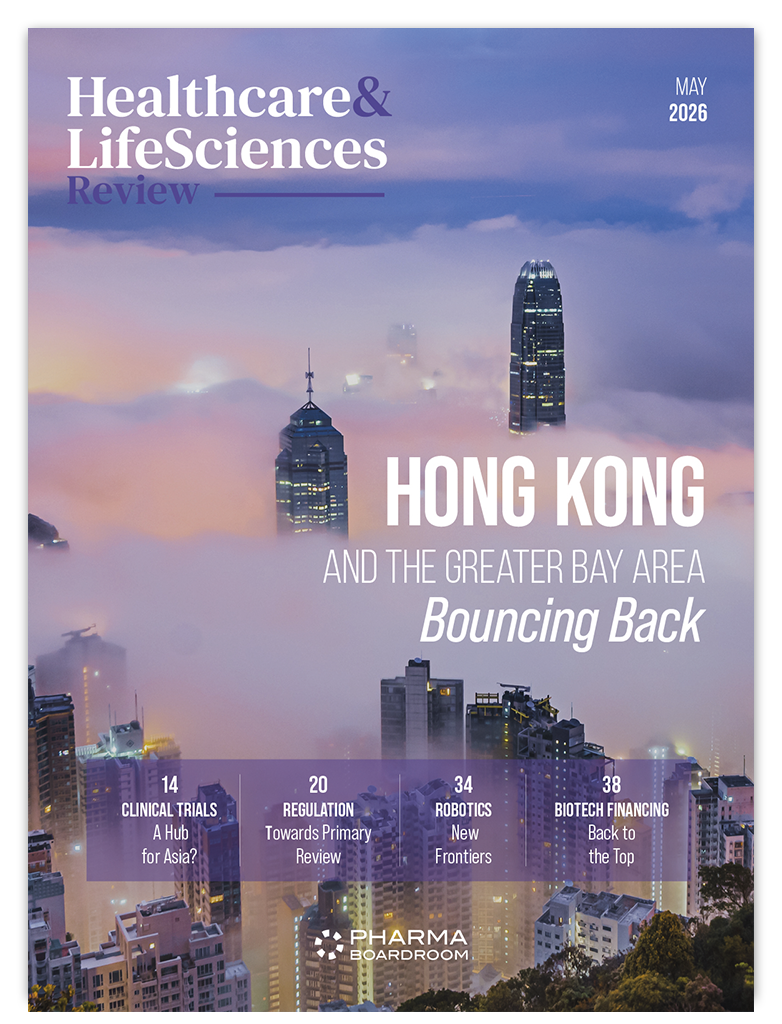
When, in his 2023 policy address, Hong Kong Chief Executive John Lee announced the territory’s intention to conduct its own primary reviews of medicines, the initial industry reaction was mixed. The legitimate questions of what this updated regulator would do, and whom it would serve, swirled, with many Western multinationals raised concerns that this would add an extra layer of bureaucracy to an already small market.
Almost three years on, the product registration framework in Hong Kong has evolved dramatically, and there is a broader mood of positivity about the direction of travel. The “1+” mechanism, seen as a bridge towards a fully-fledged primary review system and a pull for more global clinical trials to be situated in Hong Kong, already allows new drugs to be launched in Hong Kong following a single global approval and some local data (as opposed to the standard two approvals).
Additionally, launching in Hong Kong can lead to faster access on the mainland; a pilot scheme lets certain medicines as-yet unapproved by China’s regulator, the National Medical Products Administration (NMPA), be used in select Greater Bay Area hospitals. This goes both ways, with high-standard Hong Kong approvals potentially serving as a springboard to global markets for Chinese biotechs.
Hong Kong’s proposed regulator, now known as the Centre for Medical Products Regulation (CMPR), is set to conduct its first primary reviews later this year, with full implementation by 2030. Here, key stakeholders weigh in on the ambition and scope of the project, its potential impacts, as well as the gaps that still need to be addressed.
From Recipient to Collaborator
Lo Chung-Mau, Secretary of Health
“The CMPR will mark a pivotal evolution in Hong Kong’s regulatory approach. While maintaining rigorous standards for quality, safety, and efficacy, we are shifting from a passive role to a more collaborative one, serving not only as a regulator but also as a facilitator of innovation.”
“Developing a mature and internationally recognised regulatory authority demands both global collaboration and a carefully sequenced approach to institutional growth. We have already begun by deepening our partnership with the Chinese Mainland for training and technical exchange. Beyond this, we maintain close ties with Singapore’s Health Sciences Authority (HSA), a long-standing partner whose experience we both learn from and complement. Such cooperation reflects our belief that regulatory progress stems from mutual learning, not competition.”
“In parallel, we are aligning our framework with the WHO’s Global Benchmarking Tool (GBT), the leading international standard for assessing regulatory maturity. The CMPR is being established within the Department of Health to ensure a fast and stable start, consolidating resources, systems, and expertise under direct government support. Once mature, it will transition into an independent authority. The timeline is clearly defined: the CMPR will be launched in 2026, with primary evaluation activities introduced in stages from that year and full capability expected by 2030.”
Busting Scepticism
Tony Cheng, managing director & GM Hong Kong & Macau, Merck Healthcare
“The government’s decision to set a 2030 target for the CMPR is significant, and while there was initial scepticism in the industry, we have since seen clear determination to make it happen. Officials have engaged with industry associations, held explanatory seminars, and even begun internal rehearsals within the Department of Health to prepare for this transition. These rehearsals have lengthened current timelines somewhat, but in my view, this is a worthwhile price to pay for building the necessary infrastructure for primary review.”
“The question that naturally arises, both within Merck and across the industry, is why companies would pursue primary review in a market of only seven million people. The answer is that Hong Kong’s importance is not defined by market size but by strategic value. Our KOLs are genuinely world-class, with influence that extends well beyond local practice to international guidelines. In the past, Hong Kong sometimes struggled to attract trials because other markets were larger commercially, but recently we have secured major studies precisely because of the credibility and authority of our KOLs.”
“Significant and Encouraging” for Global Pharma
Nicholas Teo, general manager, GSK Hong Kong & Macau
“We view the CMPR as a significant and encouraging development. The direction is similar to what Singapore has built, with a full primary evaluation pathway operating alongside streamlined routes for products already approved by trusted regulators. Hong Kong’s acceptance as an observer in the ICH is an important milestone and signals a clear intention to build the capabilities required for international recognition.
Moving toward primary regulation will require a deeper understanding of value. Beyond clinical efficacy, regulators will need to assess cost effectiveness, broader health outcomes and longer-term system impact. As these capabilities develop, Hong Kong will increasingly be able to make decisions that reflect its own population’s needs rather than relying entirely on assessments shaped by the priorities of the EMA, FDA or other external agencies.
Walking the Talk as a “SuperConnector”
Sabrina Chan, senior executive, Hong Kong Association of the Pharmaceutical Industry (HKAPI)
“The CMPR is planned to conduct its first primary review within this year. This represents rapid movement from concept to implementation. This matters because Hong Kong sees itself as a superconnector with ambitions to become a biomedical hub. It is essential to attract overseas investment to Hong Kong and establish robust supply chains. As a biomedical hub, we must ensure effective transformation from bench to bedside. If we examine the product lifecycle – from molecule through preclinical development, clinical trials, product registration, to market – primary review will support local pharmaceutical innovation, local research and development, and particularly help attract more strategic clinical trials to Hong Kong for registration purposes.
“Because we will have primary review capability, some Chinese companies seeking overseas markets may leverage Hong Kong’s independent evaluation, whilst overseas products could use this pathway to access China. This creates synergy supporting Hong Kong’s dual ambitions.”
Talent: A Vital Piece of the Puzzle
Lo Yuk Lam – President, HK Bio-Med Innotech Association
“Policy frameworks alone are insufficient without people who can operate them. Alongside advocacy for CMPR, efforts have therefore focused on building regulatory science and leadership capability. A dedicated training initiative was launched to expose professionals, students, and public-sector participants to international regulatory systems and harmonisation principles. The aim is to develop talent that understands both Hong Kong’s environment and global expectations, ensuring that as CMPR evolves, it rests on a credible and sustainable foundation.”
Valuing Innovation
Amy Ho, general manager, Roche Pharma
“If Hong Kong wants to maintain progress, it will need a framework that recognises innovation more explicitly and rewards it consistently. This requires a broader view of value. Looking at price alone does not capture the wider impact of effective therapies, which can reduce long-term healthcare use, support economic participation, and improve quality of life. These elements carry significant societal benefit, and incorporating them into assessment processes would allow decisions to reflect the true contribution of new treatments.”
“Hong Kong does not yet have a formal health technology assessment framework, although interest in evaluating innovative medicines is growing. The recent Policy Address indicates early steps toward a more structured approach. Drawing on international experience while customising it to the local context will be crucial. Together, these changes could support the financial sustainability of the healthcare system while fostering an environment for meaningful innovation.”
Retaining Flexibility
Kara Cheung, general manager Amgen Hong Kong & Macau
“There is a strong case for maintaining flexibility as the system evolves. The “1+” mechanism and primary evaluation serve different but complementary purposes, and preserving both pathways allows Hong Kong to remain attractive to international companies while ensuring that patients can access a wide range of innovative therapies. If the ambition is to establish Hong Kong as an international innovation hub, offering multiple regulatory routes will be important to sustain both competitiveness and access.”