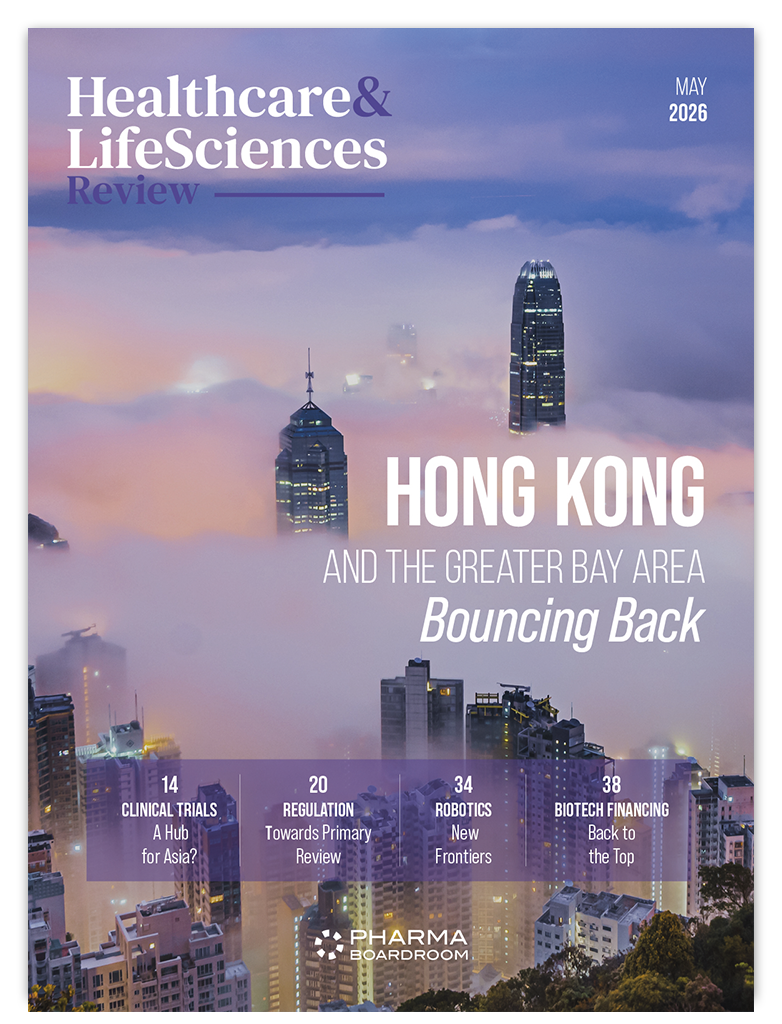
Hong Kong’s capital markets are entering a more dynamic phase, underpinned by a gradual return of international investors, a maturing innovation ecosystem, and targeted reforms aimed at improving market access and efficiency. As Johnson Chui explains, the growing momentum across healthcare, biotech, and technology is reinforcing Hong Kong’s role not only as a listing venue, but as a platform that supports sustained capital formation and global expansion.
How would you describe your role at Hong Kong Exchanges and Clearing Limited and what motivated your transition from investment banking to the exchange?
I serve as Head of Global Issuer Services at Hong Kong Exchanges and Clearing, where I oversee our primary markets issuer coverage function. We work closely with companies across the Chinese Mainland and internationally throughout their Hong Kong listing journey — from the private stage, through IPO, and into the post‑listing phase.
Our focus is on providing practical guidance, facilitating access to capital, and supporting issuers as their needs evolve over time. This is a coordinated global effort, with teams based in Hong Kong, the Chinese Mainland, Singapore and London. We also just made some hires and are in the process of expanding our presence in the Middle East, reflecting our broader ambition to strengthen international connectivity and deepen cross‑border capital flows.
Hong Kong today hosts around 2,700 listed companies, the majority of which originate from the Chinese Mainland but are increasingly international in both operations and investor base. Alongside this, the market includes over 170 international issuers and more than 200 companies with dual listings across over ten global exchanges, underscoring its role as one of the most international capital markets globally. This diversity is a defining strength, as it allows us to serve as a bridge between China and global capital while continuing to attract a broader mix of issuers.
I joined HKEX in 2024 after more than 25 years in investment banking, including senior roles at Nomura, Credit Suisse, Citigroup, and Goldman Sachs. Having spent my career advising companies on listings and capital markets transactions, the opportunity to contribute from the exchange side was a natural progression. It offered a different vantage point — one that allows me to help shape market structure rather than operate within it. Hong Kong is at an important juncture, and we see clear potential to build on its long‑standing role as an international financial centre by making the market more accessible and globally relevant.
Since joining, we have focused on a series of targeted enhancements to improve both the efficiency and predictability of the listing process. In October 2024, we introduced an enhanced IPO vetting framework that provides greater clarity on timelines, with regulators aiming to complete the review within two rounds of comments and around 40 business days for well-prepared applications. This was followed in May 2025 by the launch of the Technology Enterprises Channel (TECH), which supports companies listing under Chapter 18A for biotech and Chapter 18C for specialist technology. The initiative enables earlier engagement before formal filing and introduced confidential filing for these sectors, an important step for early-stage and IP-sensitive businesses.
We have also refined the IPO price discovery and allocation framework, with reforms implemented in August 2025 to provide issuers with greater flexibility while aligning more closely with international practices. Cornerstone investors continue to play a key role in anchoring transactions, although there is no prescribed minimum or hard cap under the rules. Taken together, these changes reflect a broader, ongoing effort to make Hong Kong’s market more flexible, transparent and competitive, while maintaining the quality and standards that underpin its global standing.
How do you assess the recent momentum of Hong Kong’s capital markets and the development of its healthcare and biotech ecosystem?
Hong Kong has seen a clear resurgence in capital markets activity, with 119 IPOs raising approximately USD 37 billion over the past year, placing it among the leading global listing venues. This was accompanied by around USD 66 billion in follow-on fundraising, including a record level of equity-linked issuance, which reflects not only a reopening of the IPO window but also sustained depth in secondary capital formation. The recovery has been broad-based, with technology, industrials, and new energy driving issuance, while healthcare and biotech re-emerged as a meaningful contributor as the year progressed, alongside continued activity in consumer and natural resources.
Within this, healthcare and biotech have regained momentum in a more durable way. The sector generated approximately USD 15.6 billion in equity capital markets activity, including both IPOs and follow-ons, with biotech accounting for around USD 6.2 billion. Beyond the headline figures, the more important signal is the level of sustained transaction activity and the quality of capital formation, which suggest that the market has stabilised and is functioning effectively again. This momentum has continued into the current year, supported by improving sentiment and stronger participation from a broader investor base.
This progress is rooted in the structural reforms introduced in 2018, which marked a turning point for Hong Kong. The introduction of Chapter 18A created a pathway for pre-revenue biotech companies to list, while the weighted voting rights regime enabled founder-led and high-growth technology companies to access the market. At the outset, Hong Kong did not have a fully developed ecosystem to support these sectors. Over time, however, that ecosystem has taken shape. Experienced research analysts have relocated or returned, specialised investors have emerged across venture capital, private equity, crossover, and public markets, and generalist investors have become increasingly familiar with the sector. This has resulted in a more informed and resilient investor base, capable of supporting companies through different stages of development.
As a result, Hong Kong has established itself as one of the leading global platforms for biotech fundraising, supported by a more complete ecosystem spanning issuers, investors, and intermediaries. The listed healthcare universe now reflects a broad range of segments, from pharmaceuticals and services to biotech and contract research and manufacturing, while the increasing convergence between healthcare and technology, particularly in artificial intelligence and data-driven drug discovery, continues to expand the profile of companies coming to market. At the same time, the internationalisation of Chinese healthcare and biotech companies has accelerated, with licensing and business development activity evolving from single-asset transactions towards broader, platform-based partnerships with global pharmaceutical groups. This shift reflects both the growing quality of underlying science and a more outward-looking approach, reinforcing Hong Kong’s role as a gateway between China and global capital.
What defines the current investor landscape in Hong Kong, and how has it evolved in this latest market cycle?
The recovery in Hong Kong’s IPO market has been accompanied by a broad re-engagement of international capital, alongside the continued strength of regional and China-based investors. What this has reinforced is the distinctive depth and diversity of the investor base in Hong Kong. Global institutional investors from the United States and Europe are active alongside Asia-focused funds and a wide spectrum of China-related capital, including insurers, long-only funds, and hedge funds. This combination remains a defining characteristic of the market, where international and regional investors participate side by side, creating a more balanced and complementary ecosystem than in many other financial centres.
Within this broader base, the role of specialist capital has become increasingly important, particularly in sectors such as healthcare and technology. Global investors operate alongside established regional players, as well as a wider network of sector-focused funds across both private and public markets. This creates a degree of continuity across the investment lifecycle, with capital often supporting companies from early-stage funding through to IPO and into the secondary market. It is also common for private equity and venture capital investors to participate in public offerings, including as cornerstone investors, which reinforces long-term alignment and supports transaction stability. At the same time, the investor mix has continued to broaden, with increased participation from Middle Eastern sovereign wealth funds and a more visible presence of European institutions, many of whom are now consistently active in Hong Kong IPOs.
For larger and more visible transactions, this typically results in a well-balanced allocation between international investors and regional capital, which supports both effective price discovery and more stable aftermarket performance. Taken together, these developments point to a more integrated and mature investor landscape, combining global reach with local depth, and generalist capital with increasingly specialised expertise. This evolution has been an important factor in underpinning the renewed momentum in sectors such as healthcare and biotech, where investor understanding and engagement have become more sophisticated over time.
How does Hong Kong ensure the quality of listings while maintaining an open and market-driven framework?
Hong Kong operates within a clear, rules-based framework in which any company that meets the listing requirements is eligible to access the market. Within that structure, there is a strong and deliberate focus on the quality of the listing process itself. This begins with the preparation of the application, where the standard of the prospectus, the clarity of the equity story, and the rigour of due diligence are critical. In recent years, there has been a clear emphasis on improving the quality of A1 filings, with that expectation extending not only to issuers but also to sponsors, banks, and legal advisers, as this forms the foundation for a more efficient and credible listing process.
The second layer is driven by the market through price discovery and investor engagement, where the objective is to ensure that companies are positioned appropriately from the outset. The refinements introduced to the IPO framework are designed to enable more effective feedback from institutional investors, allowing issuers and their advisers to calibrate valuation and allocation in a way that supports both the transaction and its aftermarket performance. This process is not only about pricing, but also about building the right investor base from the beginning, which is essential for long-term liquidity and stability.
Alongside this, the broader market ecosystem plays an important role in supporting companies as they transition into the public markets. We work closely with the professional community to maintain a constructive feedback loop, while the depth of the investment banking, research, and advisory landscape in Hong Kong provides companies with a well-established support structure. The ecosystem itself has become increasingly mature, particularly in sectors such as healthcare and biotech, offering new issuers a clear set of reference points and the ongoing support needed to operate effectively as public companies.
Where do you see Hong Kong’s international positioning evolving, and how is the listing framework adapting to support that?
Hong Kong’s international positioning is evolving alongside a shift in the profile of its issuers. While many listed companies originate from the Chinese Mainland, an increasing number operate with a genuinely global footprint, both in terms of revenue and strategic orientation. This is particularly evident in sectors such as healthcare and biotech, where companies are often built with a dual-market approach from the outset. At the same time, the market is gradually attracting a broader group of international issuers across different industries, including those at the intersection of technology and life sciences, which reflects a steady diversification beyond its historical base.
This trend reinforces Hong Kong’s role as a bridge between China and global capital. For issuers, the decision of where to list extends beyond the IPO itself and increasingly centres on the ability to access a deep and diverse investor base, sustain liquidity in the secondary market, and raise follow-on capital as the business evolves. Hong Kong’s strength lies in bringing these elements together within a single platform. The experience of companies returning to the market for additional fundraising after listing illustrates this dynamic, particularly in sectors where ongoing capital is required to support long-term development and innovation.
Looking ahead, the focus remains on continuing to refine the listing framework to ensure it remains competitive and internationally relevant. The competitiveness review launched in March 2026 reflects this approach, with proposals aimed at enhancing flexibility within existing regimes such as Chapters 18A and 18C, improving access for international issuers, and strengthening pathways for secondary and dual listings. These developments build on earlier initiatives, including the introduction of the Technology Enterprises Channel and confidential filing, and form part of a broader, ongoing effort to adapt the market to changing issuer and investor needs. While market conditions will continue to evolve, the priority remains clear, to maintain a framework that is both flexible and robust, while upholding the standards that underpin Hong Kong’s position as a leading international financial centre.