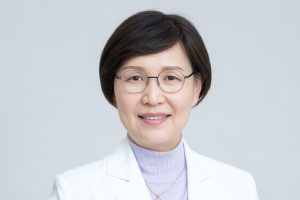
Kyong Hwa Park, Professor of Medical Oncology at Korea University College of Medicine, reflects on Korea’s transformation into a global oncology research hub, highlighting the impact of the K-MASTER precision medicine initiative, advances in cancer vaccines, and leadership in international clinical trials. She calls for improved reimbursement for genomic profiling, stronger government prioritisation, greater pharmaceutical support for investigator-led research, and urgent action to address Korea’s looming shortage of medical oncologists.
Your career has spanned more than two decades of rapid evolution in oncology. Could you reflect on your journey and the milestones that have defined it?
The Korean Medical Oncology Society has grown enormously over the last two decades. Cancer treatment historically began with surgery – it was the surgeons who led the field – but over time it became clear that systemic treatment could meaningfully improve patient prognosis. The last two decades in particular have been the era of precision medicine, with genomic profiling rapidly transforming patient care and driving extended survival and improved cure rates.
I started my career as a professor in 2007, so this year marks exactly twenty years. Over that period I have witnessed the establishment of new standards of care across medical oncology, and more recently we are seeing equally significant advances in haematology, surgery, and radiotherapy. It has genuinely been a period of rapid evolution, both for me personally and for Korea as a country.
Twenty years ago, Korea was essentially a newcomer in global clinical trials. We began actively participating in international trials around that time, and Korean medical oncologists formed the Korean Cancer Study Group to begin conducting our own phase II and phase III trials aimed at changing the standard of care for our patients. As we gained greater access to global pivotal trials, a generation of genuinely influential researchers emerged. Professor Young-Jue Bang, now retired from Seoul National University, was a pioneer in gastric cancer – he led one of the first practice-changing phase three trials using a new agent, and that opened the door for many other Korean medical oncologists to lead trials that subsequently changed the standard of care in non-small cell lung cancer and breast cancer. Korean medical oncologists are now key players in global clinical trials, and several have become recognised key opinion leaders internationally.
Around 2016 and 2017, the Korean government launched the K-MASTER programme, a government-driven precision medicine initiative. At that point, most major Korean hospitals began systematically profiling the cancer genomes of their patients.
The K-MASTER programme generated genomic profiles for thousands of advanced cancer patients. What were the most significant findings?
Before K-MASTER, only a handful of Korean institutions had access to genomic profiling at all. In 2017, the government decided to launch a precision medicine initiative with substantial grant funding behind it. At the time, Korea did not have its own established sequencing platform – platforms like Foundation Medicine or Caris existed in the United States, but we did not have access to them. The Korean MFDS made the decision to approve laboratory-developed genomic profiling systems domestically, which allowed for lower cost, though at the time nobody knew for certain how the efficacy would compare, since it had never been directly tested.
Using the K-MASTER research fund, we adopted two domestically developed next-generation sequencing platforms: one developed by the Samsung Genomic Institute at Samsung Medical Center, and the other by Seoul National University Hospital.. We used both in parallel initially, since they differed somewhat in the number of genes and the targeted sequencing approach, and within two to three years we merged and upgraded them into a unified K-MASTER panel.
Using these platforms, we sequenced approximately 10,000 Korean cancer genomes. The results showed a genomic profile broadly similar to Western data by cancer type, which validated that our platform was working correctly. But when we examined the data in detail, we found meaningful differences. There are more alterations in DNA repair pathways in the Korean population. In specific cancer types, the patterns diverge further – for example, Korean breast cancer patients show different patterns of TP53 gene alteration compared to Western patients. Through this work we were able to define the genomic landscape of solid tumours in the Korean and broader Asian population and characterise how it compares to Western genomic data.
We also validated the clinical relevance of this profiling through 20 investigator-initiated clinical trials run in parallel, mostly genome-based and sequencing-driven, which demonstrated that the genomic alterations detected by our platform were genuinely actionable using targeted agents matched to those alterations. Beyond the science, the programme had a significant practical impact: medical oncologists across Korea, including those working outside Seoul, gained real access to precision medicine and direct experience with genomic profiling. That gave the broader oncology community a rational and practical understanding of how to apply genomic data in actual patient care – not just in theory.
Beyond K-MASTER, you have also conducted research on peptide-based cancer vaccines. Can you tell us about the status of that work and where you are taking it?
The cancer vaccine programme is separate from K-MASTER. It began with a question I had during my residency: what is the main factor that determines patient prognosis, given that patients with the same disease receiving the same treatment often have very different outcomes? I came to believe there were two key factors – the biological characteristics of the cancer cells themselves, which genomic profiling defines, and the patient’s own immune response to those cancer cells. I was drawn to the immunology side, believing that cancer vaccines could become a key future solution.
I sought out a mentor working in that field and was fortunate to find Dr. Mary L. Disis at the University of Washington’s Tumor Vaccine Group. After completing my residency and clinical fellowship, I applied for a postdoctoral position under her mentorship and began developing cancer vaccines. We achieved a strong result with a vaccine targeting IGFBP2, and after my training, her group successfully translated that research into a clinical trial.
I was then hired as faculty at Korea University College of Medicine, where I continued developing additional cancer vaccines in parallel with my precision medicine work in the hospital and lab. One of my first products targeted HSP90. I developed it, licensed it to a Korean company, and they conducted a phase I trial that showed genuinely good immune responses in advanced-stage cancer patients. They are continuing development and working toward an IPO. I have since identified and patented another target for cancer vaccine development, which I hope will also translate into clinical application.
It is worth noting how dramatically the field has changed. Twenty years ago, almost nobody was excited about cancer vaccines or even immunotherapy more broadly. After the success of pembrolizumab, we entered an era where immunotherapy is now central to almost every conversation in oncology. But people have also recognised that checkpoint inhibitors are not effective for every patient or every cancer – only a subset of patients benefit from checkpoint inhibition alone, or even in combination with standard cytotoxic therapy. That has driven renewed interest in cancer vaccines, with targets ranging from neo-antigens to PD-L1 and IDO. The development of mRNA vaccine platforms, and the substantial safety data generated by COVID-19 vaccines, has accelerated this field considerably. I believe cancer vaccines can now be translated for patients using these new platforms, potentially in combination with immune checkpoint approaches.
You have also been involved in international trials, including Meck’s Keynote-355 trial, looking at immunotherapy combinations in triple-negative breast cancer. What were the key takeaways, and how are they shaping international guidelines?
My specialty is breast cancer, and triple-negative breast cancer remains an area of significant unmet need despite real progress. We have seen good results from immunotherapy combined with chemotherapy in the neoadjuvant setting, but many patients still experience recurrence, and once that happens, current standard of care – even with newer ADCs or immunotherapeutics – cannot reliably cure them.
There are two areas where I see the greatest need for improvement. The first is in the early-stage setting, where we likely need something beyond pembrolizumab adjuvant or ADC adjuvant therapy alone – a dual vaccine approach is one possibility we are exploring. We also need a more individualised approach for patients who do not achieve pathologic complete remission with neoadjuvant treatment. We need to be able to identify, in advance, which patients are unlikely to respond to current standard of care.
The second area is the metastatic setting, where the emerging evidence supports ADC plus checkpoint inhibitor combinations regardless of PD-L1 expression status – that is becoming a meaningful new treatment option. But we still need a more precise approach for patients who do not respond to current ADC or immunotherapy regimens. That means identifying new targets and exploring immune checkpoint mechanisms beyond PD-1, which requires a deeper understanding of the tumour immune microenvironment for these specific patient populations.
With expensive regenerative medicines, reimbursement is often the bottleneck. How would you assess patient access to the latest cancer therapies in Korea today?
That is an important question. Korea’s cancer outcomes are very strong globally, but that success is not built on good access to drugs or good access to genomic profiling. In fact, access to immunotherapy and targeted agents in Korea is quite limited, even for drugs with solid phase three data behind them. Korea operates a single public insurance system, and the government is extremely cautious about expanding reimbursement, because every drug added to the reimbursement list represents a significant financial burden on the system as a whole. The approach to adopting new drug treatments is genuinely restrictive.
Genomic profiling tells a particularly striking story. Korea was actually the first country globally to introduce reimbursement for genomic profiling, beginning around 2015 to 2016. Coverage was expanded such that stage three and four solid cancer patients could access genomic profiling for approximately 50 percent of the total cost. But in 2023, that policy was rolled back. Today, except for specific cases involving non-small cell lung adenocarcinoma, most solid cancer patients must pay approximately 80 percent of the total cost of genomic profiling out of pocket. That has significantly limited access to the test itself.
What makes this particularly difficult to understand is that the new drugs identified through genomic profiling continue to be reimbursed, even as the profiling that identifies the right patients for those drugs is not. The core issue is that the national health insurance review authority wants standard cost-effectiveness evidence, and that kind of analysis is extremely difficult to apply to next-generation sequencing genomic profiling. You cannot evaluate it the way you would evaluate a single-gene test, because genomic profiling delivers multiple forms of value simultaneously from one test: actionability across multiple potential drugs, prognostic information, germline data, and research value. There is currently no alternative test that can replace what comprehensive genomic profiling provides, but that complexity does not fit neatly into the standard cost-effectiveness framework the reviewing authority expects.
To address this directly, we launched a national research programme to assess the real-world value of genomic profiling in Korea over a three to four-year period. I am the principal investigator on that project, conducted through the Korean Cancer Association – which is the academic and interdisciplinary research counterpart to the AACR in the United States, bringing together physicians and researchers across multiple institutions. The goal is to generate the kind of real-world evidence that can finally answer the question of what genomic profiling is actually worth in the Korean system.
The Korean Ministry of Health recently rolled out its Fifth National Plan for Cancer Control, covering 2026 to 2030. What do you see as the primary targets, and what could be improved?
The Korean government is genuinely ambitious with this plan. They want to decrease overall mortality, improve early detection and cure rates through more effective screening programmes, and extend survival even for advanced-stage patients. Essentially, they are trying to address every priority simultaneously, which means there is no clear single priority given the limited resources available.
I would point to Taiwan as an instructive comparison. Taiwanese colleagues have told me their government has done particularly well specifically in breast cancer care, because they recognised they had a higher proportion of stage four patients compared to other Asian countries, and they made a deliberate decision to expand reimbursement for new drugs in both the early and advanced stages of that specific disease, with a clear and singular goal of reducing mortality. The Korean government should similarly recognise the current resource constraints and prioritise its goals accordingly, rather than attempting to address every cancer type and every stage simultaneously with limited funding.
What is your message to the CEO of a multinational oncology company considering investment in Korean clinical trials, and how do you see the government–industry partnership evolving to support that investment?
Korea is a very small market from a pure commercial perspective. But Korea is genuinely active, with strong resources – scientifically sound, capable, and motivated investigators who consistently generate good research ideas.
What concerns me is that more and more global pharmaceutical companies are reducing their support for investigator-initiated research with Korean researchers. We need more of that kind of support, not less. Sponsor-initiated phase III trials can generate practice-changing evidence, but investigator-initiated and real-world-driven research is also extremely valuable for patient care, and that kind of research can only be generated by the investigators themselves. Korea’s population and healthcare system remain a genuinely efficient environment for conducting global new drug development. I believe Korea should be regarded as one of the major partners for global new drug development and clinical trials going forward, and that requires sustained, not diminishing, investment from global pharma in our investigator community.
Do you have any concerns about the future of the oncology field?
There is one concern I would like to raise. I do not know whether this is a global phenomenon, but in Korea, the younger generation of doctors is showing less interest in medical oncology as a specialty. It has become noticeably less popular than it was previously. I believe the Korean government needs to recognise that cancer patient care is an essential area requiring sustained focus, and the declining number of young doctors specialising in medical oncology points toward a real shortage of cancer care physicians in the years ahead. Given Korea’s ageing population, the government should be paying close attention to growing the next generation of experts in this field. This is, in my view, an urgent and underappreciated issue.