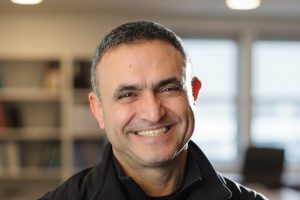
As global pharmaceutical strategies continue to shift, Ali Sleiman reflects on how Genesys Pharmaceuticals is being built as a disciplined execution platform for the Middle East and Africa. The interview explores how distributor-led models, portfolio selectivity, and strong infrastructure shape access to innovation, including in rare diseases, against an increasingly complex global backdrop. Throughout, the focus remains on practical execution rather than abstract ambition.
What prompted your transition from a multinational pharmaceutical career into entrepreneurship, and how did that experience shape the way Genesys Pharma was built?
After more than two decades in multinational pharma, I reached a point where I wanted to move beyond executing established structures and instead build something that reflected how markets in the Middle East and Africa actually function. I started my career at field level in Saudi Arabia and progressed through country, regional, and global roles across the Gulf, the Levant, India, and Asia Pacific. That path exposed me to very different operating realities and gave me a practical understanding of how strategy translates, or fails to translate, on the ground.
My time in global pharma was particularly formative. I have worked within large, complex organisations, including in India and Asia Pacific, either as country head working across TAs or regional head, managing endocrinology and cardiometabolic portfolios at scale. I have also steered successful integrations, post acquisitions, while overseeing therapeutic portfolios across in multi-country affiliates, working largely through distributor-based models. That experience made one point very clear. Performance in these markets depends less on organisational size and more on how well distributors are selected, governed, and supported over time.
The idea for Genesys emerged when the Holmed Group, the healthcare arm of Holcom, decided to move beyond a single-country footprint. Holmed already had scale, infrastructure, and long-standing partnerships with global pharmaceutical companies, but there was a clear opportunity to turn those strengths into a regional platform. Genesys was created to bridge that gap and to translate a proven local model into a coherent multi-country approach. We built Genesys Pharmaceuticals as a Dubai-based hub that enables global and regional companies to commercialise products across the Middle East and Africa without establishing their own local affiliates. We act as the single operational interface, appointing and managing strong local distributors while retaining control over regulatory strategy, supply chain, compliance, and commercial execution. Marketing, medical, and sales activities sit with us, supported by a central regulatory & supply chain teams that works closely with local partners to manage registrations and interactions with health authorities.
By structuring the model this way, we absorb much of the downstream operational and country risk, including financial exposure, while ensuring disciplined and consistent execution across markets. Genesys is not an abstract concept. It is built on existing infrastructure, long-standing relationships, and direct experience of what works in this region. That grounding is what allows us to operate with both scale and precision.
How has Genesys evolved over its first two years, and which external market dynamics have most influenced your early portfolio and geographic decisions?
Although two years is a relatively short period in which to build a regional platform, Genesys has developed against a backdrop of clear and accelerating structural change. One of the most influential dynamics has been the gradual retreat of some large multinational pharmaceutical companies from direct operations in markets where currency volatility, compliance exposure, and operational complexity have become increasingly difficult to sustain. Several countries in our region illustrate this shift clearly, with repeated devaluations and hard-currency constraints prompting many players to move away from fully owned models towards partnerships with local platforms.
This recalibration extends well beyond fragile or distressed markets. Even commercially important countries in the region remain modest in scale when set against the United States, Japan, China, or Canada, where pricing and profitability are structurally higher. As global portfolios are prioritised accordingly, uncertainty around US drug-pricing policy has reinforced a more cautious approach to launch sequencing. Ongoing discussions on international reference pricing for innovative medicines in the United States, have made some US based companies hesitant to introduce new products in markets that could influence pricing elsewhere.
Alongside this, we have seen growing interest from small and mid-sized European and Asian companies seeking access to the Middle East and Africa without building local organisations or assuming downstream risk. These partners are often prepared to supply their products but expect a platform that can manage regulatory pathways, commercial execution, and operational exposure on their behalf. This demand aligns closely with the Genesys model, which is built around taking responsibility for execution while allowing partners to remain asset-light.
Operationally, Genesys has moved from initial set-up into active execution. We have secured several portfolios that are now progressing through regulatory and launch phases. Lebanon has been our first execution market, with work underway in rare diseases and in multiple sclerosis. In parallel, we have begun piloting alternative entry models in Africa, partnering with companies that can provide reliable technology-enabled distribution operations.
Geographically, we have started to extend selectively beyond the core Middle East into East Africa. Discussions are advanced in markets such as Nigeria, Kenya, Tanzania and French-Speaking African countries, although some assets remain confidential at this stage. We have also signed what will become our largest project to date, including a specialised Alzheimer’s programme for the major markets in MEA.
How do you define Genesys’ positioning today in terms of therapeutic focus, and how is the organisation structured to support execution across diverse markets?
At this point in our development, the positioning is intentionally broad. As a young platform, the priority was to demonstrate execution rather than to impose a narrow therapeutic focus too early. In practice, early partners want evidence that you can deliver consistently across markets. Once that credibility is established through a small number of recognised names, selectivity becomes prudent and more strategic in nature. That initial breadth was therefore a deliberate choice, designed to build trust and momentum.
Execution has been the unifying principle from the outset. The leadership team is composed of experienced operators who have managed portfolios and organisations in multinational, regional and global settings, as opposed to profiles built around abstract strategy. We sit within the wider ecosystem of the Holmed Group, which gives us immediate access to senior commercial and access expertise, in addition to the services of sister companies like LeadCares, that supports on market access and patient engagement. LeadCares is an independent regional platform that supports pricing strategy, launch sequencing, government affairs, and patient support programmes, and connects closely with medical and promotional activities where needed. This allows us to keep access capabilities tightly integrated with execution, without diluting accountability.
From a scale perspective, Genesys is still early in its revenue trajectory, as most assets are progressing through legal and regulatory phases. What matters more at this stage is infrastructure. As a Dubai-based subsidiary of the Holmed Group, we build on a fully established backbone covering regulatory and quality, supply chain, pharmacovigilance, compliance, finance, HR, and customer operations. That foundation allows us to support partners end to end without having to recreate core capabilities.
Marketing and promotion are integrated in the same way. Through Valve, our in-house healthcare marketing and digital agency, we execute technology-enabled growth strategies spanning omnichannel engagement, analytics, and disease awareness. Combined with Holmed Group’s diversified presence across pharmaceuticals, consumer health, and medical devices, this structure gives Genesys the flexibility to operate across multiple therapeutic areas while remaining firmly anchored in disciplined execution.
How do you approach partner selection at this stage, and how has that process changed as Genesys has moved from set-up into active execution?
At this stage, business development is less about volume and more about fit. Genesys was not created in a vacuum. The initial momentum came from demand, with several of Holmed Group’s existing principals in Lebanon asking us to replicate a model they had already seen working successfully locally, in other markets. That pull shaped our early expansion and continues to inform how we engage with new partners.
Alongside that inbound dynamic, there is still a structured outbound effort. Industry forums such as the latest CPHI in Frankfurt remain important, not as a marketing exercise but as a way to maintain a live pipeline and stay close to developments across APIs, finished products, and more specialised assets. Combined with my own network across the Middle East, Asia, and Europe, this allows us to engage early and selectively, often before opportunities become formalised. In the early phase, we were intentionally broader in scope; such collaborations helped us move quickly, generate early cash flow, and support the broader build-out of the platform, even if they sat slightly outside my core pharmaceutical background.
As the platform has taken shape, the focus has narrowed. With a team of around 25 people, most of them concentrated on regulatory, legal, and supply chain activities, capacity is a real constraint. Each launch requires significant time and investment, particularly when navigating approval with regulatory authorities and reimbursers across the region. That reality has made us more selective, prioritising assets where disciplined execution can genuinely make a difference. For now, the priority is to deliver the first wave of launches properly. Credibility at this stage comes from doing fewer things well, not from doing many things quickly. Execution and strategic fit, more than ambition, is what ultimately determines which partnerships make sense.
Looking ahead, what strategic priorities will guide Genesys’ development over the next three to five years, particularly as global sources of innovation continue to diversify?
Looking ahead, the emphasis will be on selectivity rather than scale. As Genesys matures, the focus is on building a portfolio that we know we can execute successfully over a five-year horizon. That means prioritising assets that address clear unmet needs for patients in the region, whether through genuine innovation, differentiated therapies already on the market, or products where demand is likely to exceed supply and execution becomes the defining factor. The objective is not to grow indiscriminately, but to concentrate on areas where disciplined execution in the Middle East and Africa can make a tangible difference and enhance patient access.
At the same time, we are broadening our perspective on where innovation originates. While the United States and Europe will remain important sources, we are increasingly looking to China and India, where investment in innovation and manufacturing has accelerated significantly. Our strong links into the API and supply ecosystems in both markets give us early visibility on emerging assets as well as manufacturing capacity. Chinese biopharma in particular is moving beyond manufacturing into true innovation, with products developed under increasingly stringent regulatory standards comparable to those reference authorities globally like the US FDA. Over the next few years, the ambition is to combine that global view of innovation with focused execution locally, positioning Genesys as a credible access platform for the next wave of therapies, wherever they originate, for patients in MEA, allowing for equitable access to proper care.
As healthcare systems reassess access to innovation under increasing budget and policy constraints, what principles do you believe should guide decision makers in the region?
The starting point has to be strategic discipline. Health systems cannot fund everything, but they can make more deliberate choices. Off-patent medicines, biosimilars, and generics need to be used more systematically to free up budget for therapies that address clear unmet needs. That connection matters. Savings only create value if they are intentionally reinvested into innovation rather than diluted across the system, otherwise access will continue to lag behind scientific progress.
At the same time, decision makers need to broaden their perspective on where innovation comes from. The next wave will not be driven exclusively by the United States or Western Europe. China and India are investing heavily, both in innovation and in manufacturing capacity, and recent supply constraints have shown that even originators cannot always meet global patient demand. Opening up to these markets requires rigorous GMP inspection and strong regulatory oversight, but closing the door is no longer realistic. The systems that adapt best will be those that combine openness with discipline and credibility.
How do you see the role of rare diseases evolving across the Middle East and Africa, and where can Genesys contribute most meaningfully in such a specialised landscape?
Rare diseases are moving steadily up the policy agenda, supported by faster and more flexible regulatory pathways. Authorities such as the Emirates Drug Establishment (EDE) and the Saudi Food & Drug Authority (SFDA) are increasingly enabling orphan medicines to reach patients more quickly. That creates real opportunity, but only if execution is precise. This is why we chose to work in this space; we strongly believe we can add value where coordination and focus matter more than scale.
There is also significant potential for regional collaboration on rare and ultra rare diseases, particularly across the Gulf. Today, definitions of rare diseases, diagnostic pathways, and access frameworks remain fragmented. Greater alignment around newborn screening, genetic testing infrastructure, centres of excellence, and selective pooled procurement could materially improve access for very small patient populations. Several institutions across the region, the likes of Hamad Medical Corporation in Qatar, have already demonstrated that it is possible when expertise is concentrated. For us, Lebanon represents an important pilot. After a severe healthcare and financial crisis, it has the opportunity to define a limited set of priorities, focus on diseases where early intervention changes outcomes, and build fast-track access pathways. Starting with clear criteria and disciplined execution is often the most effective way to build a sustainable rare-disease strategy.


