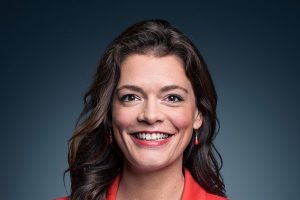
Innovation, supply security, and sustainability are intertwined challenges for healthcare systems across Europe. For CSL, these conversations are part of everyday reality, from ensuring access to plasma-derived therapies and advancing treatments for rare diseases to navigating an evolving policy landscape in one of its most important markets. Annegret Wittich-Hoeffer, Cluster Head DACH, discusses leadership through transformation, the responsibilities that come with delivering critical medicines, and why keeping patients at the centre of every decision remains the guiding principle.
After a long career across several leading pharmaceutical companies, what attracted you
to CSL?
I have spent almost 25 years in pharma and, honestly, I cannot imagine working in another industry. What has always motivated me is the sense of purpose. At CSL, I feel that even more strongly because so much of what we do focuses on rare diseases and often very small patient populations, where you can genuinely see the impact of your work. That is a huge driver for me and, I believe, for many of our employees as well.
Before joining CSL, I held leadership roles at Bayer, GSK, Hexal and Galderma, most recently leading Galderma’s Germany and Austria business. What attracted me to CSL was the breadth of the portfolio, particularly its focus on plasma-derived therapies and rare diseases. I was also fascinated by the fact that CSL is something of a hidden champion. Many physicians and patients know Behring, Seqirus or Vifor through their own interactions, but do not necessarily realise that CSL is the group behind them all. The plasma business itself was another major draw, operating with very different dynamics from any therapeutic area I had worked in before.
The people and culture have been equally important. For such a large organisation, there is an extraordinary level of commitment and drive, coupled with a mindset that obstacles are there to be overcome rather than feared. We are currently undergoing a significant transformation and, while change naturally creates uncertainty, I see it as an opportunity to combine the strengths of different cultures and build something even stronger. Having celebrated my two-year anniversary with CSL in April and already moved into my second role within the organisation, it has certainly been an exciting and fast-moving chapter of my career.
Looking back on your first two years with the organisation, what have been the defining moments and achievements of your CSL journey so far?
One of the achievements I am most proud of has been navigating the loss of exclusivity within our iron portfolio. Having previously spent around five years in the generics business with Sandoz and Hexal, I had a good understanding of how generic competitors think and where they focus their efforts. The challenge was to stay one step ahead, and I believe we managed that transition well while continuing to deliver strong business performance. At the same time, we successfully launched important new therapies, including Filspari, for the treatment of IGA nephropathy, a rare kidney disease, as well as our haemophilia B gene therapy, representing a new approach that targets the underlying cause of disease with the aim to replace the need for regular treatment.
Filspari in particular has performed very strongly, not only in Germany but also in the first international markets where it has been introduced. Managing a mature blockbuster franchise while preparing the next generation of growth drivers has been a fascinating balance between protecting what we have built and shaping what comes next.
Beyond the business milestones, culture remains one of the aspects I value most as a leader. I want people to feel trusted and empowered, and to know that not everything has to work perfectly all the time. If everything always works exactly as planned, it may simply mean we are not challenging ourselves enough. Taking calculated risks, remaining curious, avoidingcomplacency and maintaining the hunger to find new ways of doing things are all important to me. There is a saying that what got us here will not get us there, and I believe that strongly. It is something I try to instil in the teams I lead every day.
How would you describe CSL’s footprint in Germany and the strategic importance of the market within the broader group?
CSL is broader than many people realise. Under the CSL umbrella, we bring together several businesses with distinct areas of focus: CSL Seqirus in vaccines, CSL Vifor in iron deficiency, nephrology, and rare diseases, and CSL Behring in plasma-derived therapies, recombinant therapies, and gene therapy. Germany holds a particularly important place within that structure. It is our second-largest market worldwide after the United States, generating generating a significant share of the overall company‘s turnover, which means that what happens here genuinely matters for the group. If we can move the needle in Germany, it has an impact across CSL, but it also comes with a significant responsibility.
That importance is reflected in the scale and depth of our presence. We employ around 4,000 people in Germany, many of them in manufacturing, and Marburg is home to CSL’s largest manufacturing site globally. It is a major plasma fractionation facility covering the entire manufacturing process, from production and filling through to inspection and packaging, and it supplies products to around 100 countries worldwide. Marburg also represents an important part of our heritage. Emil von Behring, who received the first Nobel Prize in Physiology or Medicine in 1901 for his pioneering work on serum therapy against diseases such as diphtheria and tetanus, remains closely associated with the site and with our history. The former Behringwerke has evolved into a broader life sciences campus over time, but that spirit of scientific innovation continues to shape who we are today.
That prominence also brings into focus one of the key challenges facing the sector. Plasma is the essential ingredient behind many of our therapies, yet neither Germany nor Europe currently collects enough to meet demand. Around 40 percent of the plasma required in Europe still needs to be imported, much of it from the United States, including through our own plasma donation network. Given the volatility we have seen in recent years, strengthening supply resilience has become ever more important, which is why we continue to invest in expanding our collection capabilities and opening new donation centres, including recently in Leipzig. However, legislation differs considerably across Europe, and not every country permits the same approach. Ensuring a stable plasma supply is therefore not simply an operational issue; it has become a strategic priority for the future of patient care.
What will it take for Germany and Europe to strengthen plasma supply security in an increasingly uncertain environment?
Strengthening plasma supply security begins with the people who donate plasma. Without them, none of these therapies would exist.
While most people understand the importance of blood donation, awareness of plasma donation remains surprisingly low, even though it enables the production of medicines for a wide range of serious conditions. We need to do more to explain why plasma donation matters and the impact it has on patients’ lives. It is not simply a question of financial compensation, although different countries have adopted different models. Donors make an extraordinary contribution, and we should do more to recognise it and encourage participation. Germany still has room to improve in this regard, particularly given that donation rules vary significantly across Europe, with some countries limiting donation frequency and others not permitting plasma collection at all.
Demand for plasma-derived therapies also continues to grow. While the prevalence of primary immunodeficiencies may remain relatively stable, advances in areas such as oncology, rheumatology, and other fields mean that increasing numbers of patients develop secondary immune deficiencies and require these treatments. Plasma products are indispensable in emergency medicine and intensive care, and in many cases, there is simply no alternative treatment pathway. Depending on the indication, a single patient may require plasma collected from well up to 1200 donations each year, illustrating both the complexity of these therapies and the scale of the challenge involved in producing them.
COVID-19 exposed that vulnerability. When donors stopped coming to centres and facilities had to close, plasma collection fell dramatically and shortages quickly followed. When supply becomes constrained, difficult allocation decisions must be made, even though patients often cannot simply be switched to another treatment. That is why plasma-derived therapies are rightly recognised as critical medicines, and why ensuring access to plasma has become far more than an operational concern. It is an essential component of healthcare resilience and preparedness. I do believe there is a growing recognition of this reality, both in Germany and across Europe. The Federal Institute for Drugs and Medical Devices (BfArM) now identifies supply-relevant and supply-critical substances, while initiatives such as the European Critical Medicines Act reflect a broader focus on strengthening supply security. However, no single stakeholder can solve this challenge alone. Protecting access to plasma-derived therapies requires coordinated action across industry, policymakers, healthcare providers, and payers. The more we focus on practical solutions together, the better placed we will be to protect the patients who depend on these therapies.
How do you prioritise such a broad portfolio, and where do you see the greatest opportunities to improve patients’ lives in Germany?
The real challenge is focus because, across our portfolio, there are many areas that deserve attention. Plasma-derived therapies remain a major priority and cover a broad range of indications. Haemophilia is a good example of that long-standing commitment. We have been working alongside the haemophilia community for more than 50 years, continuously improving treatment options and, more recently, introducing gene therapy.
Bringing something genuinely novel into practice is never straightforward. It requires not only scientific innovation but also new approaches to reimbursement and implementation. There is still considerable discussion around how these therapies fit into the healthcare system and how physicians and patients can best identify who is suitable. Yet for the right patients, the impact can be profound, offering a degree of freedom that was previously difficult to imagine.
I am equally passionate about our nephrology and rare disease portfolio. Many of these therapies aim to slow disease progression and help patients delay, or even avoid, the need for dialysis if treatment begins early enough. The opportunity to preserve quality of life in that way is incredibly meaningful. Our plasma-derived medicines used in intensive care and trauma settings are treatments that healthcare professionals rely on every day, often where no alternative exists. Immunoglobulins are another important part of the business, although demand continues to outpace what Europe can currently provide through domestic plasma collection, underlining the need for a resilient plasma supply.
Then there are conditions such as hereditary angioedema (HAE), which many people have never encountered. Before joining CSL, I had not heard of it myself. Yet it is a devastating condition characterised by sudden and unpredictable swelling attacks that can become life- threatening if they affect the airway. Patients live with that uncertainty every day, never knowing when the next attack will occur. Over the years, we have been able to offer treatments that increasingly help patients gain control over their disease, and with one of our more recent
innovations, a monthly dosed prophylactic therapy, significantly improving their quality of life.
Those are the moments that remind you why this work matters. Beyond the complexity of the science, what stays with you is the knowledge that the right treatment can fundamentally change how someone is able to live their life.
How do you view Germany’s position as an innovation market, and what role does the current access framework play in sustaining that leadership?
I think Germany is at something of a crossroads. It has long been regarded as one of Europe’s leading markets for innovation and early access, and I believe we all want it to remain that way because timely access to innovation ultimately means better care for patients. At the same time, healthcare systems are under significant financial pressure and governments are looking for ways to contain costs, such as the recently introduced Act on the Stabilization of Contribution Rates in Statutory Health Insurance. The challenge is ensuring that, in trying to solve one problem, we do not create another by making the environment less attractive for innovation and business relocations. Discussions around launch sequencing have become more prominent, particularly in light of international developments, and we need to recognise that Germany’s pharmaceutical sector contributes not only to healthcare outcomes, but also to employment, investment, and the broader economy.
Our experience with AMNOG, Germany’s health technology assessment and pricing framework for new medicines, has actually been positive. Like many companies, there was a learning curve when it was introduced, but over time it became clear that success depends on understanding the system early and designing development programmes accordingly. The choice of comparator, the endpoints selected and ensuring that studies generate the evidence required for the German assessment process all make a difference. If approached in that way, the system can work well, although it remains resource-intensive, particularly for smaller organisations.
I fundamentally believe that health technology assessment is the right principle. Healthcare systems need to distinguish between genuine innovation and incremental change, and to reward therapies that make a meaningful difference for patients. The real discussion is therefore not whether assessment should exist, but how the framework continues to evolve. There have been debates around orphan drug provisions and other potential adaptations, and we will have to see how those unfold. However, some form of health technology assessment will remain part of the landscape. The key is ensuring that Germany continues to strike the right balance between sustainable healthcare financing and maintaining an environment that embraces innovation and gives patients access to advances that can improve, and sometimes transform, their lives.
Looking ahead, how would you like the international community to understand CSL’s role in Germany and the direction the organisation is taking through this period of transformation?
I think one of the things we still need to do better is explain who CSL really is. Many people know CSL Behring, CSL Vifor, or CSL Seqirus through a particular therapy area, but do not necessarily recognise CSL as the organisation behind them. That is part of the rationale behind bringing the businesses together more closely under a single CSL identity. It gives us a stronger and more unified commercial and medical footprint, allows us to participate more meaningfully in the conversations shaping healthcare, and creates broader opportunities for our people to grow across functions, portfolios, and geographies. Ultimately, it is about leveraging our collective strengths more effectively and extending the impact we can have for patients.
I would also like more people to understand just how vital many of these therapies are. Whether in intensive care, rare diseases, or other highly specialised settings, these are medicines that patients genuinely cannot live without, yet their importance often remains invisible. Whenever I explain the reality behind these treatments outside the industry, there is usually a moment when people realise how many lives depend on them every day. Raising that awareness is an important part of our mission.
It also reflects the culture we are building: one grounded in purpose, commitment, and the belief that together we can overcome challenges and make a meaningful difference. That sense of purpose remains one of the things I value most about being part of CSL today.