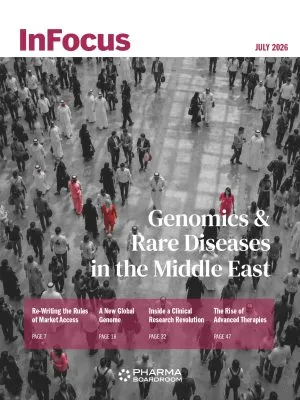
Articles
Once regarded as a strategic afterthought by international biopharma, the Middle East has undergone a profound transformation in recent years, emerging as an early adopter of next-generation therapies for rare diseases. Regional regulatory authorities are accelerating approval timelines, reflecting an aggressive institutional ambition to secure speedy access to cutting-edge medical science. “In some cases,…
A quarter-century after the Human Genome Project revolutionized biology, genomic sequencing has matured from an ambitious scientific frontier into an indispensable clinical reality. Today, molecular insights routinely guide everything from targeted oncology to rare disease diagnostics. Yet, this genomic revolution harbours a profound systemic bias: nearly 90 percent of all sequenced cohorts are restricted to…
Long regarded as a clinical trials backwater, the Middle East has experienced a tremendous surge in clinical research over the past five years. This boom is fuelled by a global demand for representational equity and an urgent need to correct a stark imbalance, as Middle Eastern populations currently account for just 1.24 percent of global…
After years of foundational investment in genomics, population screening, and rare disease diagnostics, Gulf nations are entering a transformative era: the delivery of advanced therapeutics. The cell and gene therapy (CGT) landscape within the GCC has fundamentally shifted from importing foreign cures to establishing localized, highly sophisticated manufacturing and clinical ecosystems. Propelled by ambitious national…
The Middle East contains one of the world’s strongest concentrations of expertise in the rare blood disorder thalassaemia. The story starts with the high prevalence of this disease in the region – thalassaemia affects roughly one in 100,000 people globally but reaches up to ten percent of the population in certain Middle Eastern countries –…